
 پەرلەمانی کوردستان
August 12, 2026
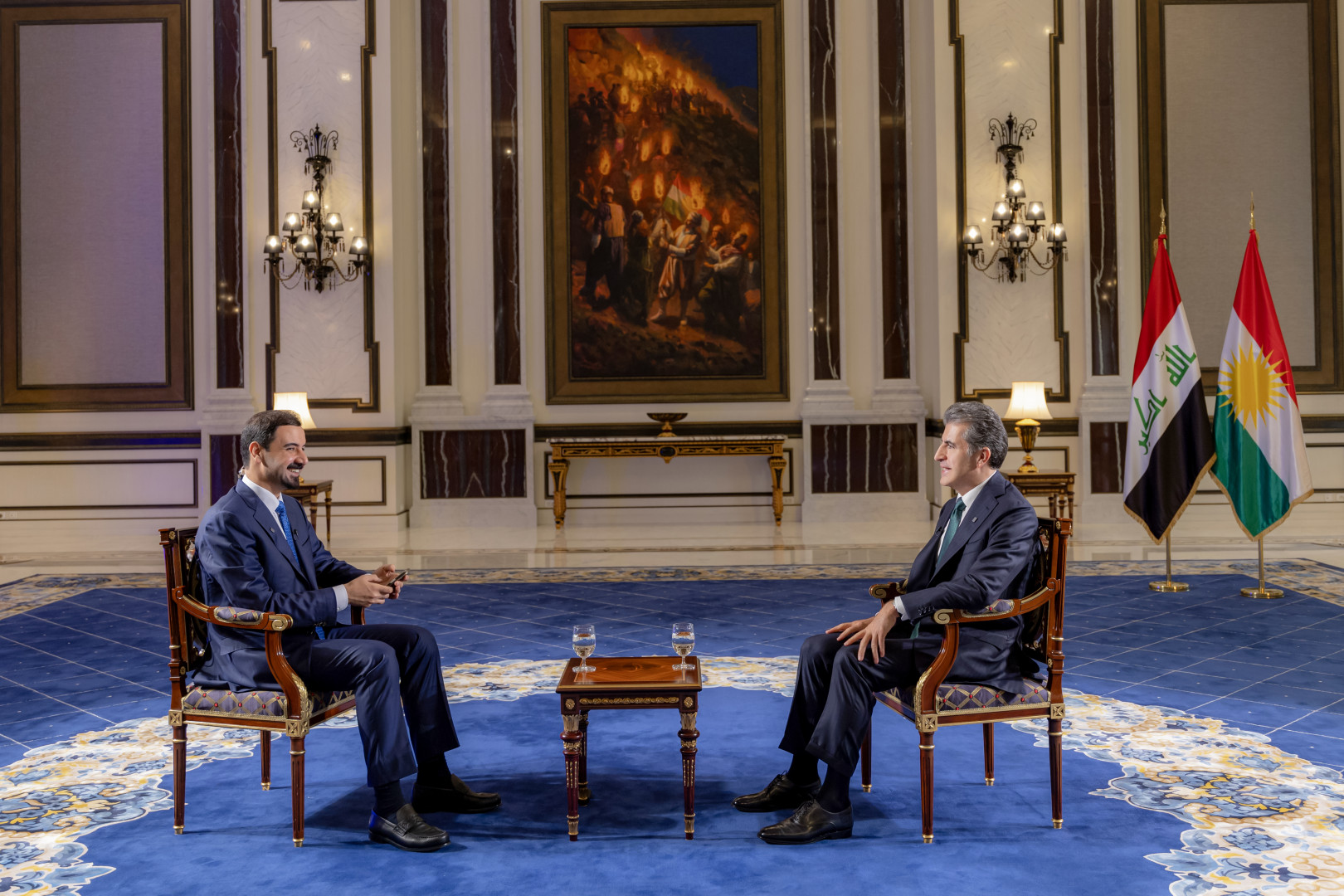
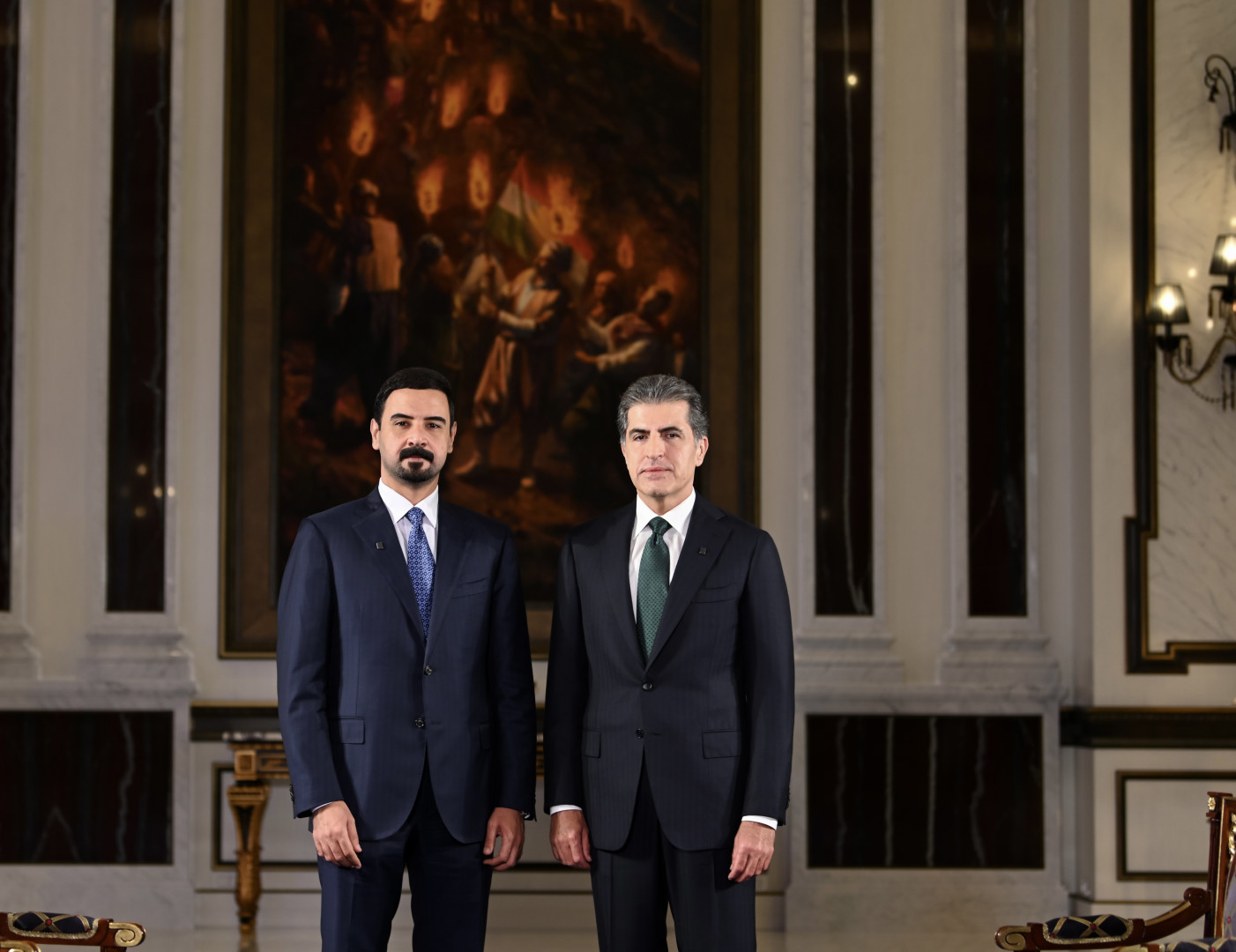
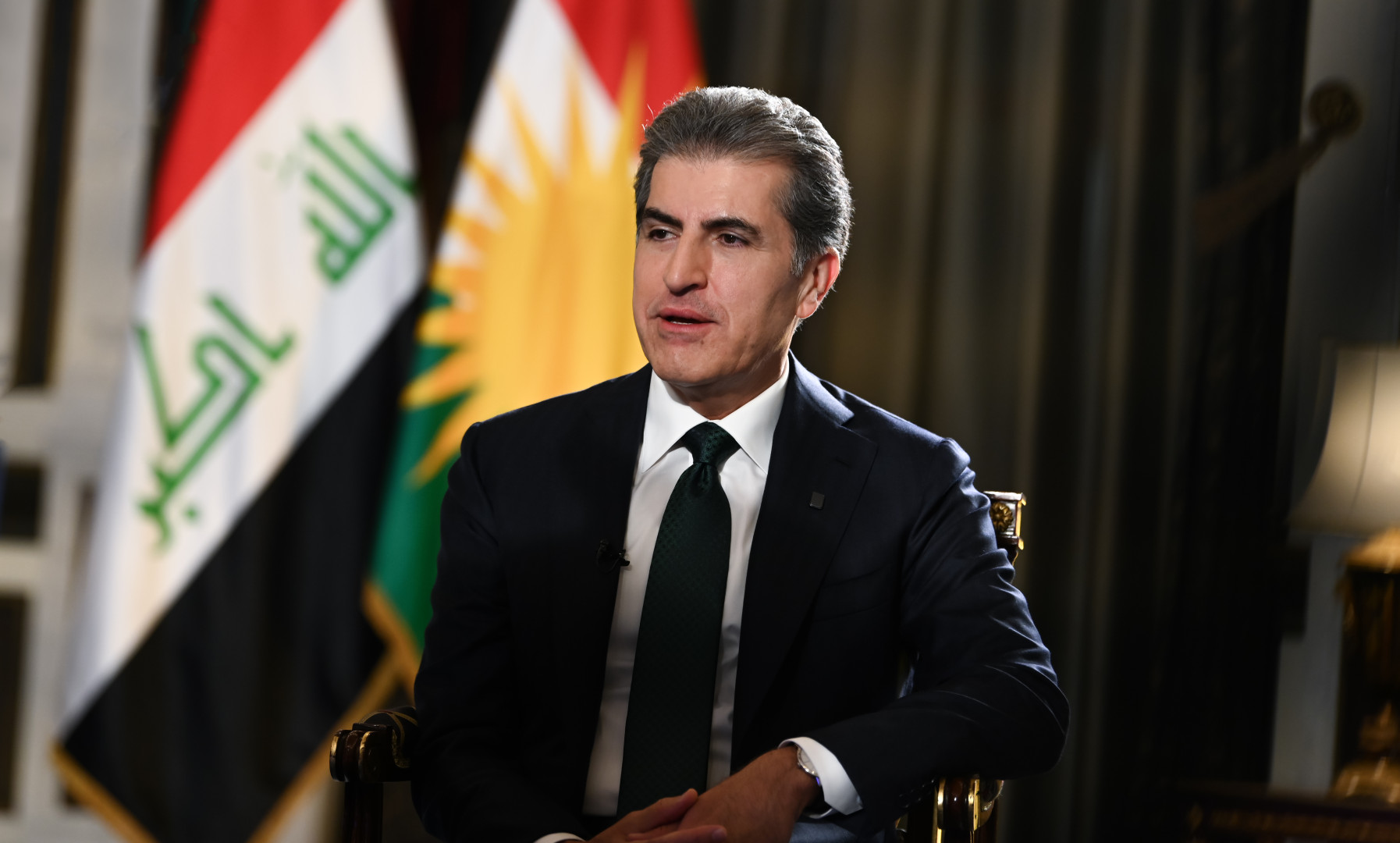
President Nechirvan Barzani appeared on Al-Sharqiya TV’s “Muwajaha” program, where he answered the host’s questions regarding recent developments in Iraq and across the region. The full readout of the interview is below.
Host:
Good evening.
Since October 7, the region has experienced rapid change. These developments have notably altered the balance of power and established a new reality, from the incidents in Gaza to the situations in Syria and, subsequently, the United States–Israel conflict with Iran.
In light of these changes, it seems Iraq faces a new reality that cannot be managed with a passive approach. The challenges of integrating weapons under state control, the financial crisis, and the political landscape, along with shifting security and regional dynamics, are pressing. All of this places Iraq on the threshold of a different phase that requires a clear vision and a thorough evaluation of the events unfolding around it.
From this perspective, several critical strategic questions arise:
Does Iraq have a clear vision for its future? Is it equipped to tackle its internal challenges and adapt to regional and international shifts? Or will it continue to wait for the surrounding crises to resolve? Furthermore, what is the status of the Kurdistan Region? Given the ongoing developments in the region, which have also affected the Kurdistan Region, what role does it play in shaping Iraq's future?
Numerous questions demand attention today, and more crucial than providing answers is assessing whether Iraq is genuinely ready for the phase that follows these changes.
These are the topics we will endeavor to discuss with His Excellency, President Nechirvan Barzani, this evening.
Host:
Once again, good evening. We extend our warm welcome to His Excellency Nechirvan Barzani, the President of the Kurdistan Region. Welcome, Mr. President.
President Nechirvan Barzani:
Thank you.
Host:
Mr. President, we appreciate this opportunity and thank you for accepting our invitation. We might have many questions that could require a significant amount of your time, but we hope you will address all of them with openness.
President Nechirvan Barzani:
You are very welcome.
Host:
From the beginning, we were keen to understand what President Nechirvan Barzani discussed during the State Administration Coalition meeting. This led us to several issues Your Excellency raised, which we have compiled into a series of questions.
Let us start with the first question:
You mentioned that we are all in the same boat and that we deeply appreciate the sacrifices made by the Popular Mobilization Forces. However, the question is: what is the future of Iraq's armed factions? How do you perceive them? Do you distinguish between the PMF and the factions, or do you regard them as a single entity?
President Nechirvan Barzani:
Thank you very much, Mr. Hisham, and welcome to Erbil. I want to emphasize that in the Kurdistan Region, we hold in high esteem the sacrifices of the Popular Mobilization Forces and the Iraqi army, along with their partners, the Peshmerga forces in the Kurdistan Region, for defending Iraq's territory. The PMF is an official institution established by law, and I want to reiterate our profound respect for the sacrifices made by the PMF in defending Iraq. Regarding the distinction between the PMF and the factions, whenever we visit Baghdad, we are frequently provided with explanations that clarify the differences between the PMF and the factions. Nevertheless, both the factions and the PMF receive funding from the Iraqi state and are supported by the Iraqi government.
Our stance on the factions is not one of mere opposition; the essential question is: what direction is Iraq taking? We are all in this together. From Baghdad to Basra and extending to Zakho, we share a common journey. We believe that the actions of these factions do not serve Iraq's interests or contribute to a brighter future for the nation. On one side, these factions pose threats to our neighboring countries and have launched drones toward Arab nations. Is it right for a group within Iraq to become a source of danger to Jordan, Saudi Arabia, the United Arab Emirates, Qatar, Bahrain, and the Kurdistan Region? Our concern is not personal with the Popular Mobilization Forces; rather, our position is rooted in the broader national interests of Iraq. We assert that the Iraqi Constitution and the government program presented by Prime Minister Ali Al-Zaidi during the formation of the government clearly state that weapons should be under state control. This is our stance. We believe that these forces should operate under the authority of the Commander-in-Chief of the Armed Forces, who is the Prime Minister of Iraq, and be subject to his command. The sooner we can resolve the issue of the factions, the better it will be for all. It is crucial for the leaders of these forces to consider whether it truly benefits Iraq for them to hold these weapons and use them at their own discretion. A significant question emerges from this situation: who holds power in Iraq? Is it the Prime Minister, the political forces, or are there groups operating outside the law whose actions do not align with Iraq's interests that control authority in the country?
When we travel internationally, we consistently encourage major companies to invest in Iraq and invite them to consider doing so. However, the primary question from any company interested in entering the Iraqi market is about security. Is it right for various factions to target and attack oil companies in southern Iraq? This concern is a significant reason these companies hesitate to establish a presence in Iraq.
The Kurdistan Region’s stance on the factions aligns with Iraq’s broader interests. We hold the view that all Iraqi political entities should support the Prime Minister and, for the sake of Iraq, must agree to disarm, integrate into the political framework, and become part of Iraq’s security forces. It is crucial that the authority over weapons reside solely with the government.
Host:
Mr. President, during your participation in the State Administration Coalition meeting, you may have touched on this issue when you asked Mr. Al-Zaidi, in front of the attendees, “Have you assured the Americans that weapons will be exclusively under state control?” This raises a pertinent question: at the same time, you suggested that Iraq might face international isolation. The inquiry is: do you possess information regarding whether Iraq would encounter international isolation if it fails to meet its obligations to the Americans and does not place weapons under state authority?
President Nechirvan Barzani:
To begin with, I assert that this is not merely a commitment to the United States; it is a commitment to Iraq itself. The matter of placing weapons under state control should not be framed as a commitment to the United States. Why should we characterize it as Iraq’s obligation to the United States? The United States came to our country, and eventually they will depart, but we, the people of Iraq, will remain. This is not an obligation to the Americans.
Let us consider this from a different perspective: is it truly in Iraq’s best interest to entrust our entire destiny to a select few individuals who operate beyond the law? The Kurdistan Region has faced nearly a thousand airstrikes. Furthermore, Iraqi security bases in Baghdad have also been targeted. The important question is: what benefits do these forces provide to Iraq? Setting aside the United States, why should we conflate these two matters? The United States represents a distinct matter. When the United States intervened in Iraq in 2014, it did so at Iraq's official request, seeking assistance in combating ISIS. What is our stance regarding the Kurdistan Region? We sincerely appreciate the United States and its coalition partners for their support to Iraq in the fight against ISIS. We are grateful to them, as well as to all coalition forces. Nevertheless, it is important to acknowledge that ISIS was ultimately defeated through the sacrifices made by the Iraqi army, the Popular Mobilization Forces, and the Peshmerga. This victory was a collective achievement. Why did we undertake this effort? We did so to ensure a brighter future for future generations; our objective was not to allow a group of outlaws to govern this country. The issue of placing weapons under state control is unrelated to the United States.
Now, let me clarify the situation regarding the United States: American forces, under an agreement with the Iraqi government, have been assigned a timeline for their withdrawal from Iraq, set to conclude by the end of September. During our meeting, I asked the Prime Minister, “Are you committed to this timeline?”He affirmed, “Yes, we are committed.”
Some people believe that American forces are present in the Kurdistan Region due to an agreement between the Kurdistan Region and the United States. No, the presence of American forces in Erbil is based on the agreement concluded between the federal government and the United States, and the United States is currently committed to its timeline; according to that timeline, they will withdraw their forces from Iraq by the end of September.
However, I want to make this clear to all political entities in Iraq and to the Iraqi people: if Iraq does not address the issue of the factions, it will face both international and regional isolation. Iraq's neighboring countries are eager to support it, and Arab countries are eager to invest in Iraq. I am aware of the strong interest from the Gulf states. I know how much the United Arab Emirates wants to invest in Iraq, how interested Saudi Arabia is, and how willing Qatar is to engage. Yet, this cannot move forward unless we reach a resolution. From our viewpoint, Iraq must take precedence. If we genuinely uphold the slogan “Iraq First” as our shared principle, it is crucial that we do not permit a group of outlaws to disrupt the country. This is a matter of great significance. The Prime Minister has committed to this issue, and the Iraqi Constitution has addressed it clearly. His Excellency the Prime Minister has outlined this commitment in the government program, which now requires the backing of political forces.
In the Kurdistan Region, along with all its components, we support this matter. The Prime Minister of Iraq represents all of Iraq, from Al-Faw to Zakho, and serves as the Commander-in-Chief of the Armed Forces nationwide. This is our perspective and how we approach the issue. Yes, the Kurdistan Region operates within a constitutional framework that must be respected and upheld. However, Mr. Hisham, we do not consider only what benefits this Region; rather, we focus on what serves the interests of Iraq as a whole. We genuinely aspire to an Iraq where all its components feel secure and safe, and we aim to improve the living conditions of the people, as the citizens of Iraq deserve a life far better than their current circumstances.
Host:
Certainly, Mr. President, it is evident that everything you have articulated aligns with Iraq's interests as we progress on this issue or project. However, it is essential to recognize that we cannot dissociate this matter from the United States, whether regarding commitments or other aspects, as Iraq’s assets and funds are ultimately located in the United States. The Americans perceive themselves as having played a pivotal role in the overthrow of Saddam’s regime and in the establishment of the new system. They currently have a program known as the 'New Middle East,' which signifies their control over the region and the reconfiguration of its map. All these complexities necessitate that Iraq first consolidate weapons under state authority before engaging in discussions about our mutual interests with the United States. Nevertheless, if weapons are not surrendered or placed under state control, will Iraq be subjected to U.S. sanctions? Will Iraq’s funds be at risk of seizure? These are pressing and legitimate concerns. From the perspective of the Kurdistan Region, what insights do you possess regarding this matter?
President Nechirvan Barzani:
Iraq finds itself in a unique situation. When Iraq exports its oil, the proceeds do not return directly to the country; instead, they are deposited in the Federal Reserve Bank in the United States and later transferred back to Iraq. The economic situation in Iraq is currently at a critical point. If the Strait of Hormuz remains closed and current conditions persist, Iraq will face the most significant challenges in the region.
Regarding the consolidation of weapons under state control, which I have addressed in previous discussions, even if we were to acknowledge this as a demand originating from the United States, the fundamental reality is that, prior to any external influence, it must represent an Iraqi national requirement. Setting aside external considerations and focusing exclusively on this as an inherent Iraqi duty, from my perspective and that of the Kurdistan Region, should this matter remain unresolved, Iraq risks exposure to international sanctions and potential marginalization at the regional level, which could result in diminished diplomatic standing among Arab nations and neighboring states. This constitutes my assessment of the situation.
Host:
Your Excellency maintains constructive relations with all political parties, and when I reference your name in discussions, most political actors consistently express considerable respect for your position. Have you received any indications of armed groups' readiness to engage on this matter? Some contend that this issue falls outside the purview of internal dialogue mechanisms, while others argue that it is fundamentally connected to Iranian interests. Accordingly, if the objective is to establish exclusive state control over weapons and facilitate the dissolution of these armed factions, would such an undertaking require direct engagement with Iranian counterparts at the negotiating table? I would appreciate your perspective on this assessment.
President Nechirvan Barzani:
I believe this constitutes an entirely domestic Iraqi matter. We must return to the fundamental principle of determining where Iraq's core national interests lie. Iraq's primary interest is ensuring that all weapons and equipment of force remain exclusively under state control. Regarding Iran, to articulate this more clearly and precisely, during my most recent official visit to Tehran, I engaged with Iranian officials on this issue. In the course of our external engagements and visits, we maintain coordinated consultations with Baghdad, particularly with the Office of the Prime Minister, and this matter was among the subjects the Prime Minister specifically requested me to address during my visit. Following these discussions in Tehran with Iranian officials, I wish to clearly convey what was communicated to me directly: they stated, "Please convey to Prime Minister Al-Zaidi that we are prepared to cooperate on this matter." I asked whether this represented their official governmental position, to which they responded affirmatively, confirming that this indeed constitutes Iran's official position on the matter.
Host:
May I ask which Iranian official conveyed this stance? Was this communication provided by President Pezeshkian?
President Nechirvan Barzani:
I prefer not to disclose who told me this, but they were the Iranian officials responsible for this matter.
The official responsible for this matter reiterated it on two occasions, stating, "Please convey this to Al-Zaidi.” I have discussed this issue and requested their cooperation in this case. As a neighboring country, we in Iraq expect such collaboration from them. I believe this is also in Iran's interests, not just Iraq's. What are Iran's interests in Iraq? Currently, our trade with Iran, excluding gas and other commodities, stands at around 12 billion dollars, and it would be advantageous for us to further enhance our economic ties. This raises a critical question: if these armed groups reflect on their actions in Iraq, what advantages do they perceive from their activities? Even the drones at their disposal- what value do they provide? If they engage in rational thought, they ought to evaluate what they have accomplished and what significant goals they have reached. The outcome has been nothing but a bad reputation for Iraq and harm to the Iraqi people. If this persists, the damage will only escalate. If the matter is indeed connected to Iran, as I have suggested, I was among those who, at the Prime Minister's request, addressed this issue with the Iranian authorities during my recent visit there.
Host:
So the Iranians have indicated their willingness to collaborate with Prime Minister Al-Zaidi.
President Nechirvan Barzani:
I made the request once, and they confirmed it twice to ensure clarity. On the second occasion, they reiterated: please inform Prime Minister Ali Al-Zaidi that we are prepared to cooperate.
Host:
History has shown us that at every stage, there are those who oppose decisions and agreements.
President Nechirvan Barzani:
That is correct.
Host:
This is history.
President Nechirvan Barzani:
That is correct.
Host:
In a situation where certain groups refuse to surrender their weapons, or where those weapons are not brought under state control, I think it is important to refer to Prime Minister Al-Zaidi’s request during the State Administration Coalition meeting. He sought the approval of those present to address this issue (to confront the outlawed factions) starting from October 1, should the groups continue to withhold their weapons. Based on the information we have received, it appears that you granted Prime Minister Al-Zaidi this approval. Is that correct?
President Nechirvan Barzani:
Indeed, during the meeting, we advocated granting authority to Prime Minister Al-Zaidi, and there was a strong consensus among attendees.
Host:
Consensus?
President Nechirvan Barzani:
Yes, consensus. We also issued a definitive statement on this issue. All parties expressed their commitment to supporting the Prime Minister. However, I believe that before any confrontation occurs, it is essential to engage in dialogue with those involved, and that this dialogue should be anchored in a single fundamental principle: Iraq's interests in this situation.
The concern is not that we are seeking confrontation; no one wishes for that, and we must move beyond a stage where some might desire Shiites to confront Shiites, Kurds to confront Kurds, or discord between Kurds and Shiites, or between Sunnis and Shiites. Our shared interest in Iraq should be unified. I believe that, moving forward, we require a clear and open dialogue with these groups. To my knowledge, some individuals who were in possession of weapons have acknowledged the situation and are willing to give them up. However, it is crucial that others be engaged in a serious dialogue immediately, one that aims to implement the Iraqi government’s agenda. They are undoubtedly part of this agenda and integral to Iraq’s interests. If this engagement does not occur, I fear that Iraq's options will become limited. Regarding our position in the Kurdistan Region, we endorse the government’s agenda, advocate the consolidation of weapons under state control, and support the Government of Iraq.
Host:
Mr. President, we genuinely hope to avoid a confrontation and conflict. However, you have given your support to Prime Minister Al-Zaidi to use the government’s security forces to take action against any groups that resist the directive to surrender their weapons. Do you support this approach?
President Nechirvan Barzani:
Let me clarify: all political factions have shown their support for the Prime Minister. It is crucial that we unite in our support, as this issue extends beyond personal interests; it involves Mr. Ali Al-Zaidi in his role as Prime Minister. The matter at hand affects all political groups in Iraq. He now bears this considerable responsibility as the Prime Minister of Iraq. From our viewpoint, as Iraqi political entities representing all its components—Kurds, Sunnis, Turkmen, Christians, and Yezidis—we must stand united behind the Prime Minister, because this is not a personal concern; it fundamentally relates to the interests of Iraq.
Host:
Mr. President, as we address the topic of weapon consolidation and the recent events, reports indicate that the Kurdistan Region has endured over a thousand missile and drone strikes. Yet, the identity of the party responsible for these attacks remains unknown, and no clear rationale has been offered. The question is straightforward: who is behind the bombardment of the Kurdistan Region?
President Nechirvan Barzani:
The reality of the situation is clear. As you know, this issue is often raised. When the Kurdistan Region faced bombardment, we were asked to provide evidence and information because the aggressor was reported to be unknown. Today’s technological advancements render such claims outdated. In any instance of bombardment in Iraq, it is clear where it has been initiated and where it was directed. Technology and satellite systems monitor all activity, ensuring that everything is documented. This issue does not require extensive scrutiny. The entities responsible for the bombardment of the Kurdistan Region are known. Most of the attacks originated from within Iraq, with some coming from Iran during the forty days of conflict.
Host:
From where are these attacks against the Kurdistan Region being launched? From which areas?
President Nechirvan Barzani:
From Mosul, Diyala, Salahaddin province, Kirkuk, and Tal Afar.
Host:
This means you must know who holds authority over those areas, because whoever controls them is the one carrying out the bombardment.
President Nechirvan Barzani:
We have fully verified information. The challenge is not a lack of knowledge about these groups; in fact, we are aware of the specific units involved in these actions. Our information is comprehensive and well documented.
Host:
If that is the case, why do you not engage with the leaders of these groups?
President Nechirvan Barzani:
We maintain communication with the Prime Minister of Iraq and collaborate with various political factions within the country. Should the opportunity present itself, we are open to direct discussions with these groups as well. However, they intentionally evade meetings with us. If we can meet, we will discuss with them with complete clarity and transparency. In the past, I have addressed some of these issues and held direct meetings with certain factions, particularly prior to the recent events.
Host:
Mr. President, it appears the bombardments and attacks have ceased, as we have not observed any assaults on the Kurdistan Region in recent days, whether by drones or missiles. Is this the result of an agreement or a partial understanding between Iran and the United States? If hostilities were to resume and escalate, would the Kurdistan Region face similar targeting? What is the reason for targeting the Kurdistan Region? This is the question we seek to answer: why is the Kurdistan Region being targeted?
President Nechirvan Barzani:
This indeed prompts a question for us: why is the Kurdistan Region being targeted? As a distinct entity, we are not involved in the conflict; Erbil, Sulaymaniyah, and Duhok are integral parts of Iraq. Rather than directing this inquiry toward us, I urge the leadership of these unlawful groups to clarify their motivations for targeting the Kurdistan Region. As I have previously stated, if this issue pertains to the United States, it is withdrawing according to its own schedule. Furthermore, if its presence is based on an agreement with the Government of Iraq, which does not involve the Kurdistan Region but is rather an arrangement with Baghdad, then the question persists: why is the Kurdistan Region under attack? Are we not Iraqis? Are we not human beings residing in this country? Does a citizen of the Kurdistan Region not hold Iraqi citizenship? Do they not travel using an Iraqi passport? We are indeed Iraqis, and this implies that the actions taken against the Kurdistan Region are not solely directed at it but are damaging all of Iraq and its diverse components. I am uncertain about the narrative being circulated among Iraqis who claim to represent the 'resistance.' Resistance against whom? I do not understand. Their actions are detrimental to all of Iraq. The entire nation is affected by their conduct, and the Kurdistan Region, as a part of Iraq, suffers as well.
Host:
Currently, when the “resistance” engages in attacks, it does not undermine the presence of the United States; instead, it results in negative impacts for Iraq.
President Nechirvan Barzani:
Certainly. Otherwise, they should at least articulate one of their goals. Let us convene to evaluate the influence they have exerted on the agreement allowing the United States to be present in Erbil. I assure you that they have not had a significant impact on the United States; instead, they have caused difficulties for the Kurdistan Region. They have inflicted economic challenges on the Kurdistan Region, targeted its economic sectors, and attacked its economic infrastructure, which, in reality, is part of Iraq’s economic framework. However, due to its location in the Kurdistan Region, it has become a target. They have achieved nothing. While they proclaim grand slogans and deliver grand speeches, a closer examination reveals they have failed to accomplish anything, including ending the United States' presence. Personally, I see no successes on their part.
Host:
Mr. President, if the resistance factions do not align with Iraq’s objectives, then whose objectives do they serve?
President Nechirvan Barzani:
This question should be asked of the resistance themselves so we can know who they truly serve. What is crucial to me is whether these actions benefit Iraq. The answer is no.
Host:
So, does the existence of the resistance factions bring no benefit?
President Nechirvan Barzani:
No, it has brought no benefit at all. Which resistance? What exactly are they resisting?
Host:
The United States.
President Nechirvan Barzani:
The United States has reached a decision regarding its departure; the decision to withdraw is definitive. As I mentioned earlier, the U.S. entered Iraq to aid in the battle against ISIS, and this mission is set to conclude in September. There is no justificationfor the current situation. With all due respect, even if these groups identify as a resistance, there is no valid reason for them to hold weapons and utilize them at their own discretion, causing issues for this country.
Host:
Do they not serve Iraq’s interests?
President Nechirvan Barzani:
Not at all.
Host:
Is it possible that they serve the interests of others?
President Nechirvan Barzani:
Based on what I see, no. In my view, even if some believe these groups are supporting or serving the interests of other countries, in reality they cause far more harm than any potential benefit.
Host:
We have now reached a critical point regarding our relations with Baghdad. Based on your comments, it appears you hold a positive view of Prime Minister Al Zaydi and the initiatives he is pursuing regarding the government program and its implementation. Nevertheless, we face a multifaceted challenge, particularly regarding the dynamics between the Kurdistan Region and Baghdad. Historically, we have observed that each prime minister begins with a sense of optimism, yet over time disagreements intensify until the end of their term, after which we find ourselves starting all over again. Is there a true commitment to resolving these conflicts and fostering relations in line with the Constitution, agreements, and decisions, or are we destined to see a decline in this relationship once the current government concludes its term?
President Nechirvan Barzani:
This is indeed a significant inquiry. This question typically arises with the establishment of every new government, concerning relations between the Kurdistan Region and Baghdad. Initially, there is often a period of goodwill, but the situation tends to worsen over time. However, I would like to approach this from a different angle. I do not believe the root of the issue is tied to any specific individual, nor do I attribute it to any one person. For instance, I perceive the Prime Minister’s intentions to tackle Iraq’s challenges as very encouraging, and I feel that he is earnestly striving to resolve the issues between the Kurdistan Region and Baghdad. But what is the fundamental nature of the problem?
The core of the matter lies in the fact that post-2003, we established a system in Iraq characterized as a democratic federal state. This raises a pivotal question regarding Iraq and the dynamics between Erbil and Baghdad: is Iraq genuinely a federal democratic state, or is it more centralized? This is where the primary challenge arises. From Baghdad's perspective, the Kurdistan Region is not functioning as a federal entity but rather resembles a confederal or even an independent one. To be candid, Baghdad's interaction with the Kurdistan Region is more centralized than even the most centralized systems.
Since 2003, the fundamental issue has been our inability to reach a clear conclusion on whether Iraq operates as a centralized or federal state. The system and constitution of Iraq, which received the vote of 80% of the Iraqi people, define Iraq as a federal entity. However, until the ongoing disputes with Baghdad are resolved through dialogue at the negotiation table, we continue to claim that our system is federal. What does a federal system entail? It signifies that we, as Iraqis, possess rights and responsibilities, functioning within Iraq as part of it and as citizens of Iraq. The Kurdistan Region's aspiration is simply the enforcement of this constitution.
Currently, Baghdad engages with us under outdated laws. For instance, Iraq’s financial regulations date back to before 2003, and the same holds true for its agricultural laws. These outdated laws obstruct the realization of a federal system. Within a federal framework, we are part of Iraq, and our concerns should be addressed within Iraq’s constitutional parameters. Baghdad serves as the strategic depth for the Kurds and Kurdistan, and since the Kurdistan Region is recognized as an entity under the Iraqi Constitution, its matters must be resolved in alignment with that Constitution. This essential connection is presently absent in our relationship with Baghdad, and it is imperative that it be rectified.
Why is it crucial to address this issue? From a political standpoint, we aim for a stable Iraq that benefits all its Components and paves the way for a brighter future for the nation. Resolving these challenges and achieving a cohesive, organized Iraq that enjoys peace both internally and with its neighbors depend on addressing the disputes between Baghdad and the Kurdistan Region in line with the Iraqi Constitution and for the benefit of all Iraqis.
I find Prime Minister Al-Zaidi’s intentions very encouraging. This does not imply that previous prime ministers had bad intentions; however, it is evident that this essential point has not been fully grasped in Baghdad until now. We need to clarify the situation, as we have been advocating for a federal Iraq for 23 years. It is time for a serious dialogue to determine whether Iraq is genuinely federal. I must claim that it is not; what we currently have, as a Kurdish saying goes, is “found in no apothecary’s box.” It is an uncommon system: neither centralized nor federal; in fact, we ourselves are uncertain about its nature. This is the core of the issue.
Host:
Mr. President, there is a growing perception that both parties are somewhat at ease with the current state of their relationship. Up to this point, neither the Kurdistan Region nor Baghdad has made strides toward establishing this foundation. What you referred to is not just a minor connection; it is, in fact, the fundamental basis for developing this relationship. Therefore, what you have observed from Al-Zaidi thus far contains some truth; however, the question remains: does genuine political will exist among the other parties?
President Nechirvan Barzani:
I posed this question within the Coordination Framework, commonly known as the Shiite Coordination Framework. I genuinely think it is fitting to engage in discussions with the Prime Minister; however, the parties most directly involved in this matter are those within the Coordination Framework, and discussions should primarily take place with them. Indeed, we have already engaged in conversations with them.
If you look back at the various phases Iraq has experienced since 2003, you will see that the nation has faced numerous challenges, including internal strife and the war against ISIS, which have significantly affected Iraq. This has inevitably led to a shift in priorities to some degree. Nevertheless, I am convinced that after navigating these phases, we have now reached a point where we can address these issues. The current circumstances no longer permit us to justify delays by citing the war against ISIS, counterterrorism efforts, or similar concerns. It is now imperative to earnestly explore a resolution to these issues, including the disputes between Erbil and Baghdad.
Should a resolution be reached between the Kurdistan Region and Baghdad, Iraq will embark on a new chapter, one that promises substantial political and economic improvements. We will continue our efforts with our counterparts in Baghdad. In all circumstances, the Kurdistan Region's policy is to resolve these matters through dialogue with Baghdad.
Host:
There may be a need for a government that advocates improving relations with the Kurdistan Region and prioritizes them above all else. The current administration underscores the importance of consolidating arms under state control, which is indeed a priority, while the preceding government focused on service delivery, and the one before that followed a similar trajectory. Thus, we require a government that places relations with the Kurdistan Region at the forefront, and I believe this will be its primary focus.
President Nechirvan Barzani:
The unification of arms under state authority is a crucial step in addressing the situation in the Kurdistan Region. I believe it is essential to achieve a mutual understanding that serves Iraq's interests, as it does not benefit Iraq to maintain the view that disputes between Erbil and Baghdad exist. This matter should be resolved in line with the Constitution.
Host:
We certainly hope for this outcome. However, the current political figures in Iraq are engaged in a cycle of accusations, leading to a significant trust loss. Thankfully, these political figures have not yet directed their accusations towards the Kurdistan Region, and the atmosphere remains constructive, with all parties attending state administration meetings without blame. Nonetheless, these same political figures are making various allegations against the Kurdistan Region, stemming from existing trust issues between them and the Kurdistan Region. While we may struggle to define it, there is an actual political reality and a crisis involving you and certain political figures, especially some leaders from the Shiite Coordination Framework. The numerous accusations we hear, such as claims of Israeli Mossad bases in Erbil, allegations of Erbil harboring terrorists, and claims that Erbil is uncooperative with Baghdad, all come from political leaders and highlight the depth of the crisis. How do you respond to these claims?
President Nechirvan Barzani:
These allegations are completely baseless. What is being claimed is entirely unfounded. Firstly, foreign relations are solely under Baghdad's jurisdiction, and we operate within the framework of Baghdad’s policies in this area. In terms of coordination and collaboration, we maintain the highest level of cooperation with the Iraqi Army, and there is robust intelligence cooperation between Erbil and Baghdad. When I mention Erbil, I am referring to the entire Kurdistan Region. We have an excellent level of cooperation with Baghdad in sharing intelligence, and in the areas between the Kurdistan Region and other parts of Iraq, we maintain the utmost coordination with the Iraqi Army. Additionally, concerning security issues, there is an exceptional level of collaboration between our Ministry of Interior and Iraq’s Ministry of Interior.
The issues being raised lack any real foundation. Rather than hearing such topics through media channels and social networks that aim to provoke social tensions among various regions of Iraq, it would be more beneficial to discuss them directly among ourselves. We are open and willing to engage in discussions regarding each of these matters.
Host:
So, these accusations are unfounded and stem from political disagreements.
President Nechirvan Barzani:
They are one hundred percent baseless.
Host:
One hundred percent?
President Nechirvan Barzani:
Yes, one hundred percent baseless.
Host:
These issues originate from political disagreements. What are the objectives of these political figures concerning the Kurdistan Region? Additionally, what are the aspirations of certain factions within the Coordination Framework for the Kurdistan Region?
President Nechirvan Barzani:
This question should be directed to them.
Host:
Certainly, I will ask them, God willing.
President Nechirvan Barzani:
This matter should be addressed to them. As I have mentioned before, we view ourselves as a vital part of this nation and a key element of Iraq’s social framework. Politically, we are engaged with the government in Baghdad and hold representation in the Iraqi Parliament. Our aim is to integrate into Iraqi state institutions, even though the representation of Kurds in these bodies is limited. We identify as part of this country, and our approach is straightforward: we strive to address our concerns within the framework of Iraq.
Host:
Another significant issue, Mr. President, is the financial crisis. The financial crisis currently affecting Iraq is a topic of widespread discussion and poses a serious threat. The closure of the Strait of Hormuz, its global implications, and the decline in state revenues have raised alarm among citizens, politicians, and the nation’s leadership alike. Are you worried about the worsening of this crisis? The Kurdistan Region is already grappling with financial challenges even without such a crisis, so how will it manage under these conditions?
President Nechirvan Barzani:
It is evident that the ongoing crisis resulting from the conflict between the United States and Israel on one side and Iran on the other has significantly impacted Iraq. The country is currently facing two major challenges. The first challenge is the sheer size of the public sector in Iraq, which includes a substantial number of individuals employed by the government. The government needs approximately six to seven billion dollars each month just to cover salaries, not accounting for investment expenditures and other costs.
All of Iraq’s oil export routes pass through the Strait of Hormuz, and the current situation in the Strait has placed Iraq in a position that requires all political entities to acknowledge their responsibilities and the gravity of the present circumstances. Iraq’s economic condition is quite challenging. The Prime Minister of Iraq has provided a clear overview of the country’s financial status to all attendees at the meeting, including specifics regarding Iraq’s reserves and financial planning.
We genuinely hope the current crisis does not escalate into a social crisis. It is imperative that all political factions in Iraq support the Iraqi government and the Prime Minister in successfully navigating this period. From an economic standpoint, I view this phase as extremely perilous. It is in Iraq’s best interest for this regional conflict to end as soon as possible and for the Strait of Hormuz to reopen, allowing Iraq to resume its oil exports.
Regarding the Kurdistan Region, we are ready to provide all necessary support and cooperation. However, these solutions are long-term. If Iraq intends to build a pipeline through the Kurdistan Region, we would welcome this initiative and are prepared to collaborate. Similarly, if there are plans to extend it toward Syria, we are also ready. Nonetheless, these are long-term solutions. While immediate solutions may be available, they require the backing of all political forces in Iraq for the Prime Minister to fulfill their responsibilities.
Host:
We aspire for all parties to take on their responsibilities. The Kurdistan Region's stance is explicit and well articulated, especially after the recent agreement to enhance oil exports via pipelines. We are optimistic that prompt solutions can be identified, as prolonged solutions will not sufficiently aid Iraq in this matter.
Mr. President, we shift our focus to Syria and the oil exports through Baniyas. You recently traveled to Syria, where you met with Ahmed Al-Sharaa, the President of Syria. There are claims that during this visit, you communicated with Prime Minister Ali al-Zaidi and shared his viewpoints and some specifics. However, we have only limited information and lack clarity regarding the discussions that took place in that meeting. Could you elaborate on the key understandings and conversations you had with President Ahmed Al-Sharaa?
President Nechirvan Barzani:
Before my visit to Syria, I held several meetings with President Al-Sharaa in Türkiye, during which he invited us to visit Syria. Our trip to Syria was carried out in full coordination and agreement with Prime Minister Ali al-Zaidi in Baghdad. It was not only coordinated with the Prime Minister, but I also engaged with Iraq’s political entities prior to this visit.
While my trip to Syria was undertaken in my role as President of the Kurdistan Region, it was also conducted in my capacity as an Iraqi official. Our discussion with the President of the Syrian Arab Republic was very constructive. As a neighbor of Iraq, Syria holds significant importance for us, and it is crucial that this nation achieves stability and political and economic security.
We believe that, in light of recent events and the downfall of the previous regime, the President of Syria is undertaking organized and strategic initiatives to guide Syria from its current state toward a more stable and improved future. We affirm that the Syrian people, along with all other communities, deserve a better quality of life, and we recognize that this potential is being realized through President Al-Sharaa’s commitment to fostering a stable and prosperous Syria, thereby ensuring a brighter future for his nation.
Conversely, we highlighted several important points. First, regarding Iraq, we aim for secure borders; it is essential that the boundary between Iraq and Syria remain stable, secure, and free of conflict. Economically, we underscored the need to strengthen economic ties between Iraq and Syria, including the Kurdistan Region, and the Syrian President also expressed interest in promoting these connections.
Moreover, we noted that the Kurdistan Region can play a constructive role in addressing existing challenges, including those between the Syrian government and the SDF, within the context of a unified Syria. We reiterated our willingness to assist in resolving these matters, as we have in the past. We emphasized to the Syrian President our readiness to make every effort to tackle these challenges.
The dialogue between Damascus and the SDF is progressing very positively, and the President is genuinely committed to addressing these issues within the framework of a unified Syria.
Syria is our neighbor, and the Syrian people have provided us with considerable support during challenging times. We are eager to see Syria build a positive future for all its diverse components and communities, and thus we endorse this process. Upon my return, I discussed this matter with our Prime Minister Al-Zaidi. We are hopeful that the Prime Minister will visit Damascus in the future, and we also anticipate that the President of Syria will visit Iraq, so that, as neighboring countries, we can further enhance these relations.
Host:
Mr. President, one topic that might be on the agenda concerns the Kurds in Syria. Mazloum Abdi's visits to the Kurdistan Region and Erbil suggest that he holds you in high esteem and regards President Masoud Barzani as the leader of the Kurdish people. Does this create an opportunity for discussions about supporting Syrian Kurds in forming a region, or even considering separation, and does this raise any concerns among the Syrian people? Do you advocate for the unity of Syria while also supporting the rights of Syrian Kurds?
President Nechirvan Barzani:
In the aftermath of the regime's collapse in Syria, our guidance to our brothers, whether they are part of the SDF or ENKS, and to all Kurdish factions in Syria, has been centered on a single point. We advised them to engage with Damascus, raise the Syrian flag across their territories, and address their issues with the Syrian government.
Regarding the establishment of a region, it is evident that Syria cannot replicate the model used in the Kurdistan Region, mainly due to the lack of cohesive geography. However, we do not wish to dictate the model that should be adopted in Syria; this is a matter for the Syrians to decide.
Our stance remains steadfast in advocating for the resolution of issues within a unified Syria. As for the specifics of the model, it is essential that they reach an agreement with Damascus. This matter extends beyond the Kurds, encompassing other groups such as Alawites, Druze, and Christians. In our conversations with the President of Syria, we have stressed the importance of ensuring that the rights of these groups are enshrined in the Syrian constitution.
As for the details and nature of the model, we do not involve ourselves in these discussions. We position ourselves as a supportive ally without interference, allowing them to engage in dialogue with Damascus to resolve these matters.
Host:
Mr. President, did you convey messages between Prime Minister Al-Zaidi and President Al-Sharaa?
President Nechirvan Barzani:
On every official visit I make to a country, I coordinate with Baghdad, and upon my return, I provide Baghdad with a summary of the results of my visit. I conveyed the greetings and best wishes of the Prime Minister of Iraq to President Al-Sharaa and emphasized the importance of maintaining strong relations. As I mentioned, I undertook this visit in my capacity as President of the Kurdistan Region; I also did so as an Iraqi official. This means the visit was not exclusively focused on the Kurdistan Region but rather addressed issues affecting Iraq as a whole. As I noted previously, we are optimistic that Prime Minister Al-Zaidi will visit Damascus in the near future.
Host:
Mr. President, the situation in Sinjar remains unresolved. You may wonder why I have chosen to discuss the Sinjar issue as the final topic after Syria. In my humble opinion, the Sinjar situation is also influenced by ongoing regional pressures. The primary reason, as we understand it, is that these pressures are hindering the implementation of the Sinjar Agreement. Therefore, we have contextualized it within the framework of international relations. Are regional pressures indeed the principal reason for the lack of progress in implementing the Sinjar Agreement?
President Nechirvan Barzani:
We have reached a commendable agreement, as you have pointed out. The Sinjar Agreement, established between the Kurdistan Regional Government and the Federal Government in 2020, was signed in the presence of the then Special Representative of the Secretary-General of the United Nations, Ms. Jeanine Hennis-Plasschaert. Since then, the Kurdistan Region has been awaiting the implementation of this agreement.
In my opinion, implementing this agreement will enhance security and promote political and social stability in Sinjar. The ongoing failure to implement the agreement places responsibility on the forces present in Sinjar. We have consistently raised concerns about forces operating outside the law, and several in Sinjar fall into this category. It is important that these forces withdraw from Sinjar.
Sinjar must revert to its normal state. As you are aware, when ISIS invaded, the Yezidis faced horrific atrocities. We must not politicize the Yezidi issue; instead, we should provide them with support to facilitate their return to their homeland. Both Baghdad and Erbil need to collaborate to assist them, as they are entitled to a better life. What they experienced was a significant tragedy, especially given the genocide they faced in 2014 and beyond. While other communities in Iraq also suffered, the Yezidis were disproportionately affected.
We reaffirm our belief that the Sinjar Agreement between the Kurdistan Regional Government and Baghdad is a constructive and vital step toward normalizing conditions in Sinjar.
Host:
Mr. President, for the final question: could you share your thoughts on the future of the political process in Iraq, particularly in light of the ongoing tensions in the Middle East between the United States and Israel on one side and Iran on the other, as well as the dynamics of competing axes whose policies may be imposed on Iraq, potentially aligning it with one side at the expense of the other?
In the past, Iraq has pursued a policy of balance, refraining from fully aligning with either Iran or the United States and instead fostering equal relations with both. However, current observations suggest a shift in the government's stance toward the United States, as many of Iraq's unresolved issues are with the U.S., whereas it does not face similar challenges with Iran, for instance.
Has Iraq now made a definitive choice amid these competing influences and aligned itself with the United States as a partner, or does it still maintain its balanced approach? What is your perspective on the future of the political process amid these regional tensions?
President Nechirvan Barzani:
I believe Iraq's stance during the recent conflict was neutral. Iraq cannot detach itself from its regional context, nor can it depend solely on any one nation, whether it’s the United States or another. It is in Iraq's best interest to avoid aligning with any particular axis, as the country is capable of maintaining a neutral and balanced role.
Throughout the conflict, numerous accusations were leveled against the Kurdistan Region; however, we maintained our neutrality. A key action we took was to ensure that the Kurdistan Region was not used as a base to create issues for Iran.
Host:
Iran has a different perspective, claiming that Iranian Kurdish opposition groups are active in the Kurdistan Region and that their objective is directed against Iran.
President Nechirvan Barzani:
I would like to ask whether any of these opposition groups have genuinely engaged in such activities. While social media has circulated content reminiscent of James Bond films, claiming that borders have been breached, the truth is that we have successfully prevented any actions that could pose a threat to our neighbor, Iran, from within the Kurdistan Region.
Why is this important? A core principle for Iraq is to ensure it does not become a source of danger to any neighboring country. As part of Iraq, the Kurdistan Region must not be allowed to pose a threat to Iran or any other neighboring country. We have not allowed these groups to undertake such actions.
It is accurate to say that these groups have a presence here, but this is not a new development; it has existed for nearly forty years. Our focus is on finding a resolution to this issue. Such a resolution should be achieved through collaboration among the Kurdistan Region, Baghdad, these groups, and Iran.
We are against Iraq becoming a source of threat to any of its neighbors.
In my view, Iraq’s policy thus far has been quite effective. Iraq has maintained a genuinely balanced foreign policy. Without bringing up past issues, it is important that certain actors operating outside the law not create complications for Iraq’s foreign policy. While Iraq has acted appropriately, these challenges have now become a burden for the country. I believe Iraq should remain neutral in these conflicts. It must uphold balance, maintain equal distance from all parties, and avoid dependency on any single nation.
Host:
What is your view on the future of the political system or the political process in Iraq? How do you perceive the future of the political process in Iraq?
President Nechirvan Barzani:
I think the political landscape in Iraq is progressing positively. Based on our observations, it is essential for Iraq’s political entities to lend their support to our government in Baghdad. I return to what I said earlier. We must all recognize that we are in the same boat. If a misfortune happens to this boat, it does not mean that the Kurdistan Region will be saved while Baghdad sinks, or vice versa. Our destiny is shared, and we must accept this reality. Our fate as Iraqis is one, and we must support one another.
Where the Kurdistan Region can assist Baghdad, just as Baghdad is expected to assist the Kurdistan Region, and where political forces can support the Prime Minister, they must do so. We must all work together toward a better, more prosperous future for all of Iraq.
Host:
Thank you very much, President Nechirvan Barzani, President of the Kurdistan Region, for your insightful comments. I genuinely appreciate your willingness to address all the questions I raised and the time you have dedicated to us. Thank you for this valuable opportunity.