
 پەرلەمانی کوردستان
October 12, 2026
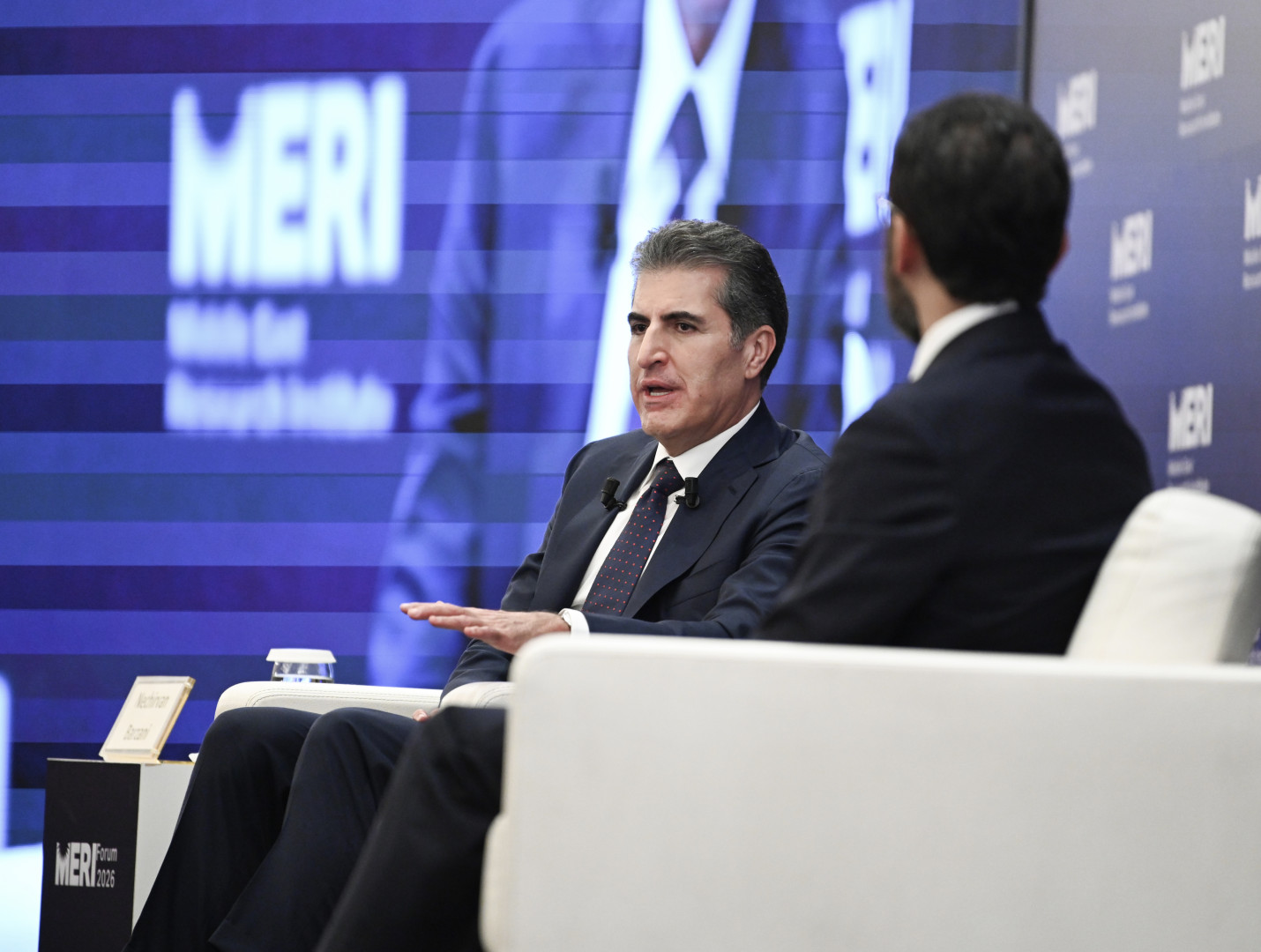
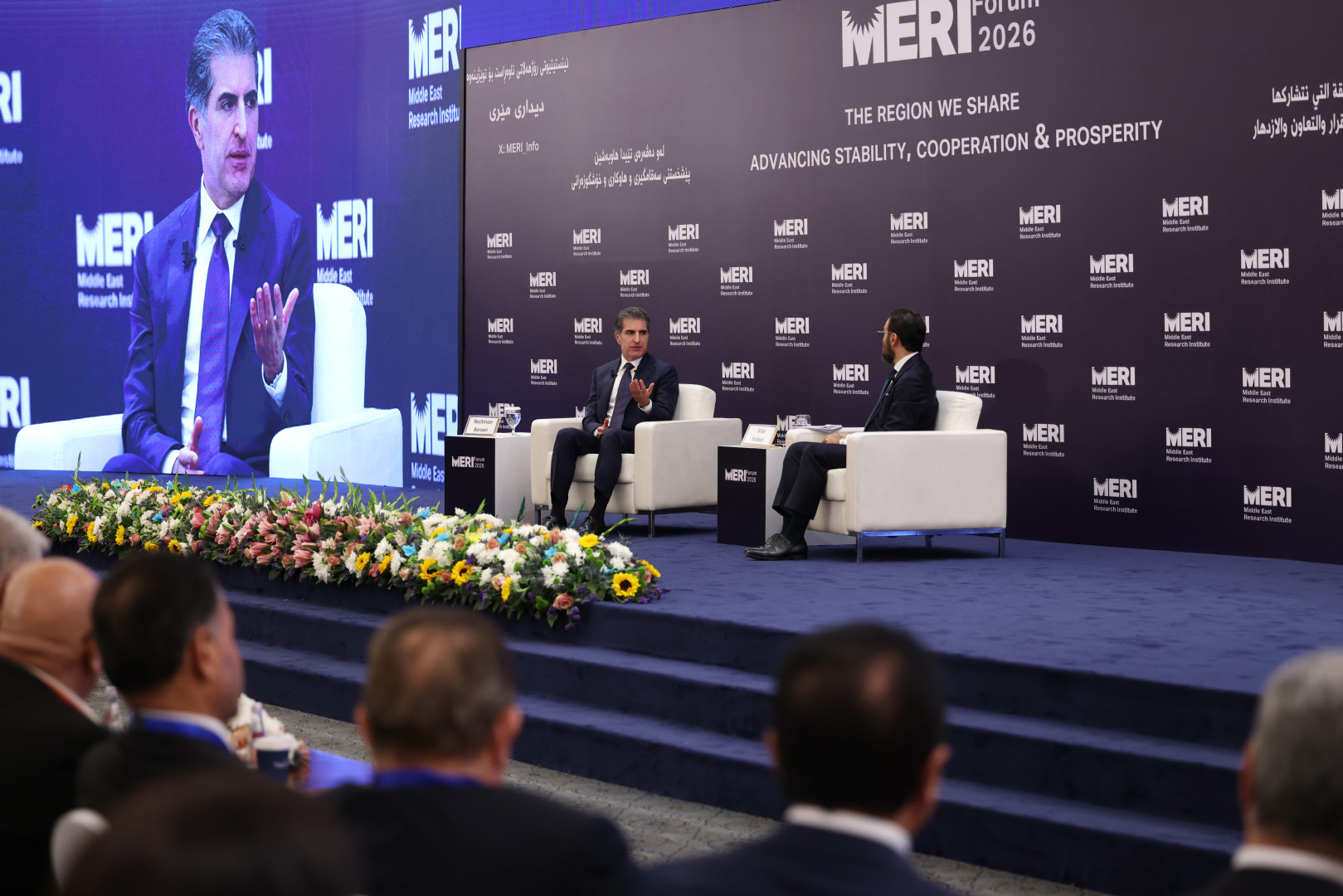
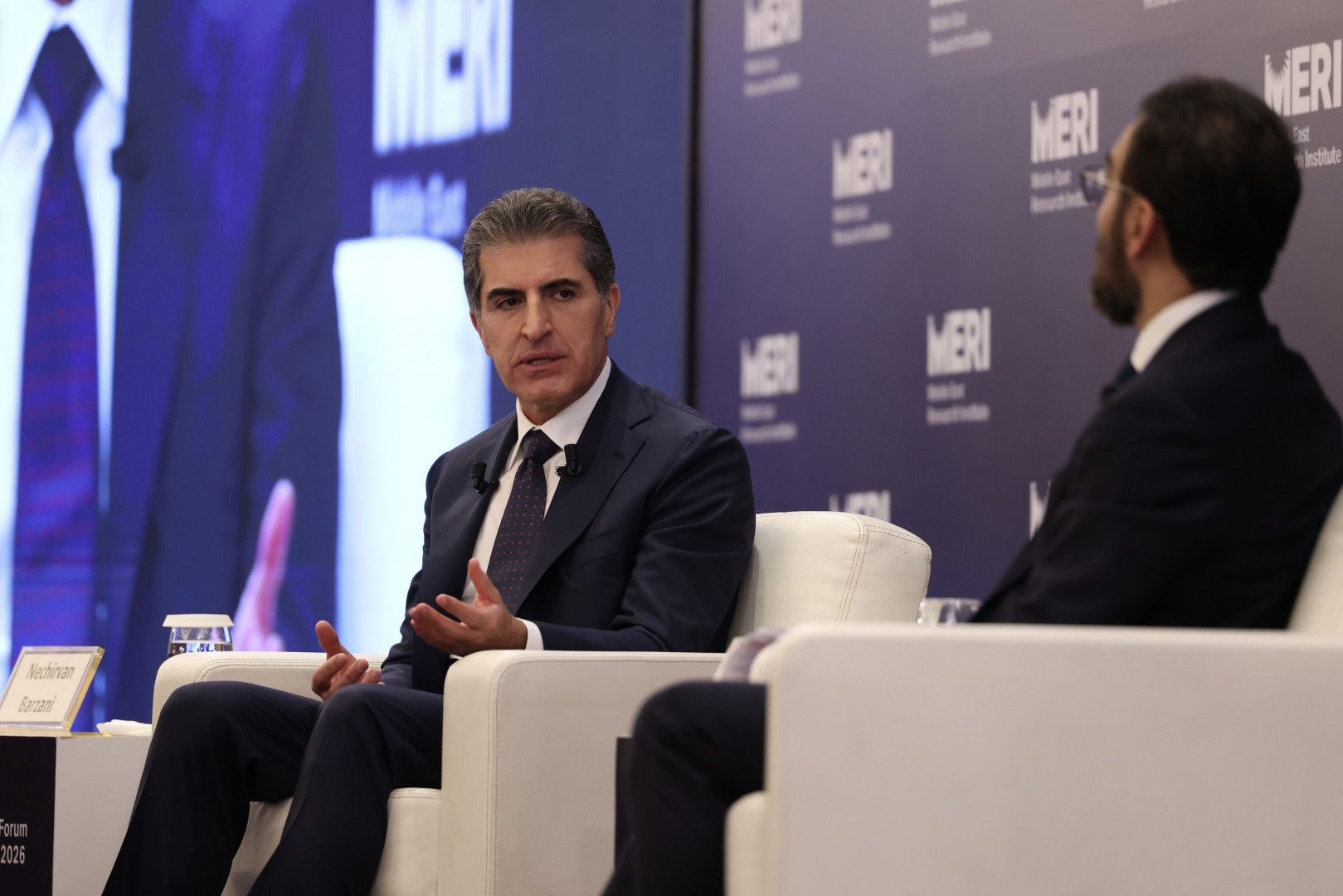
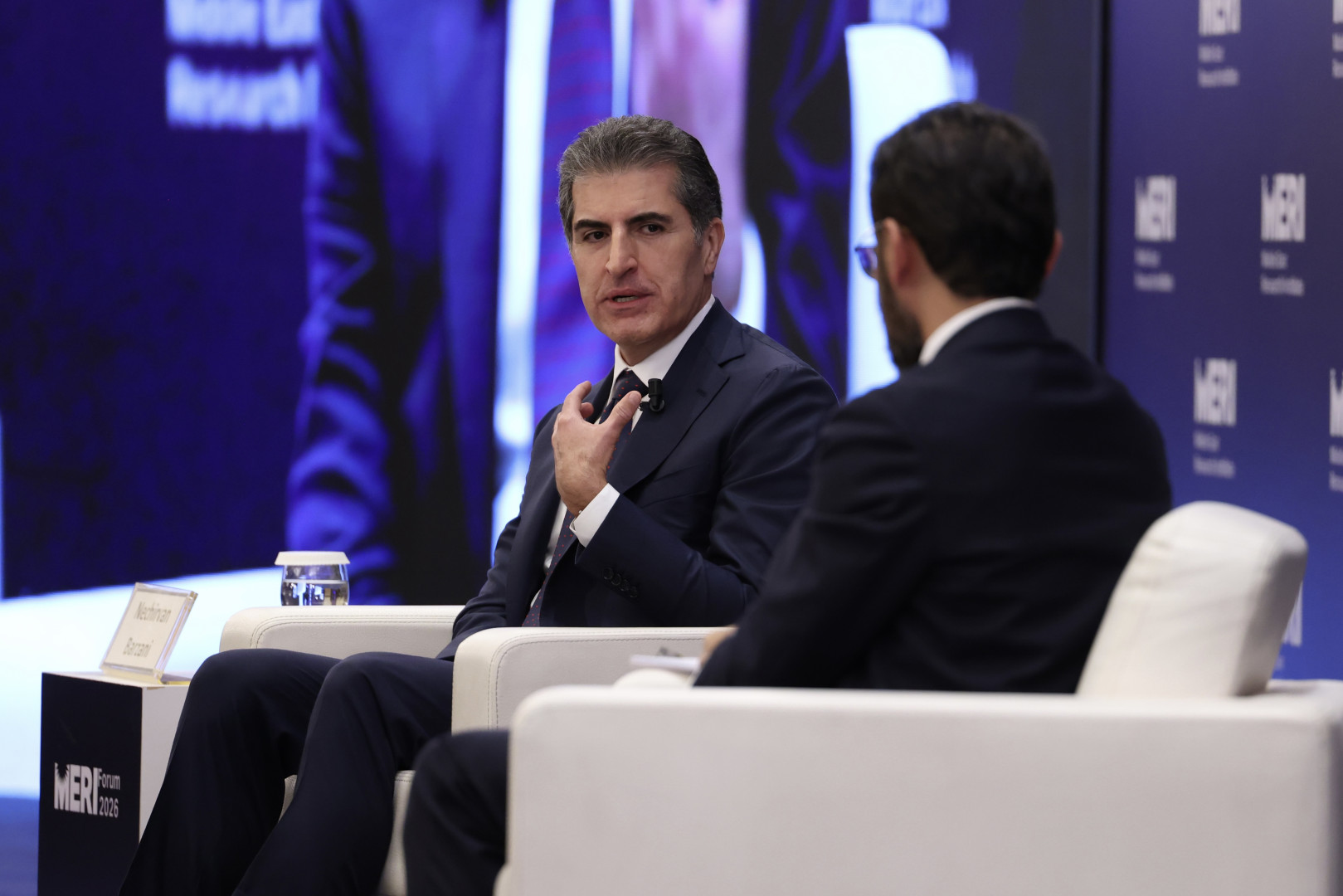
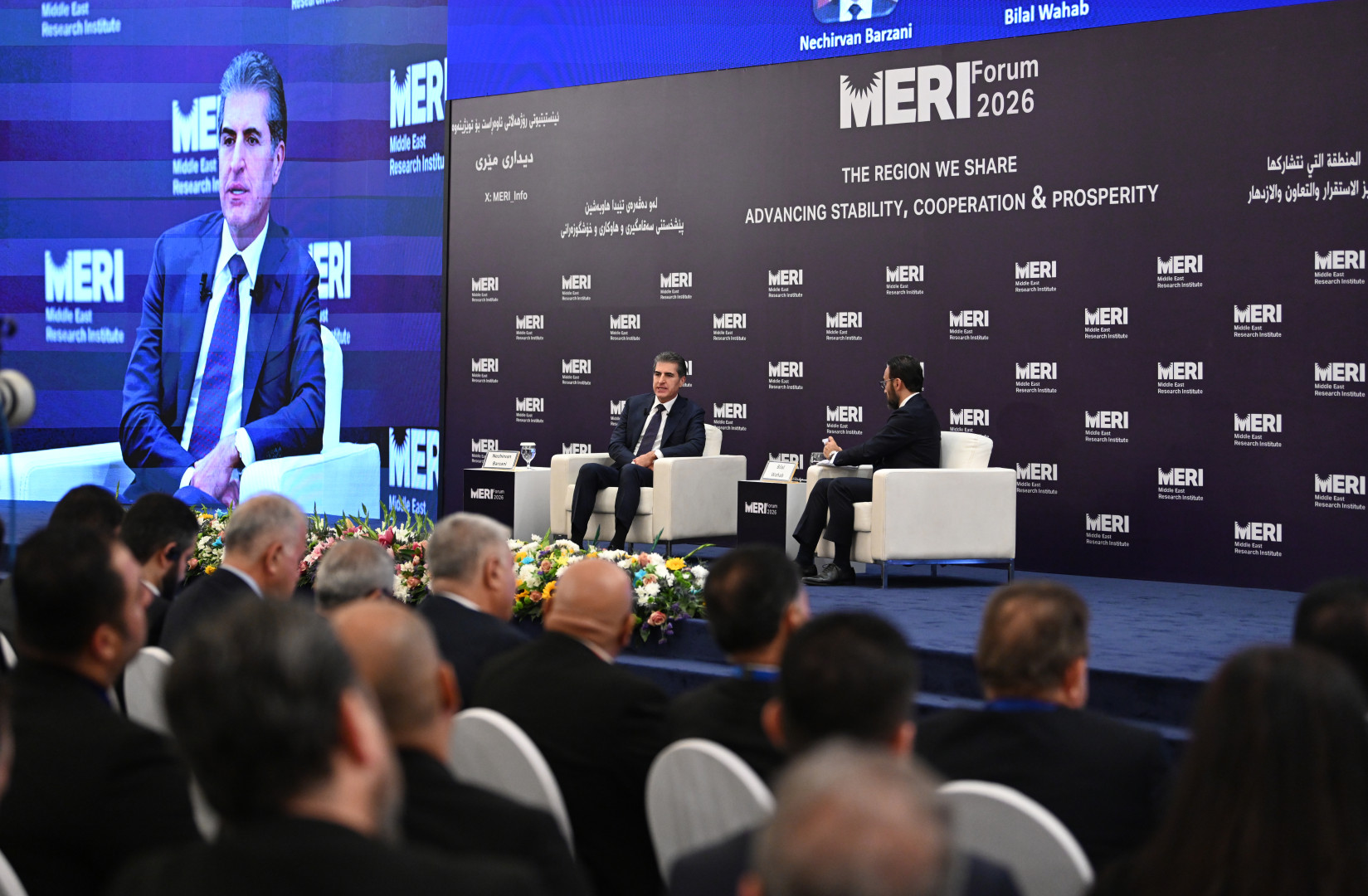
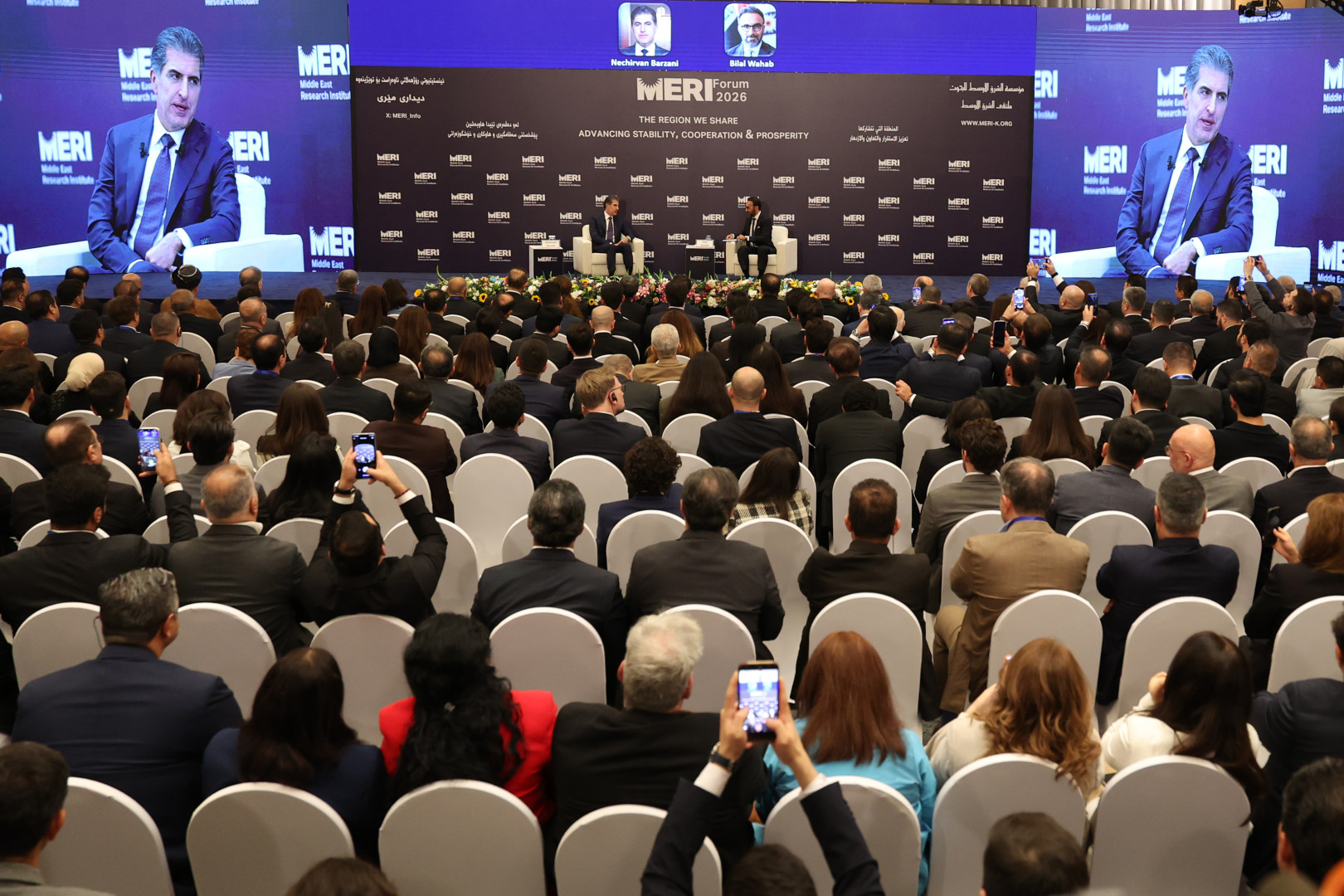
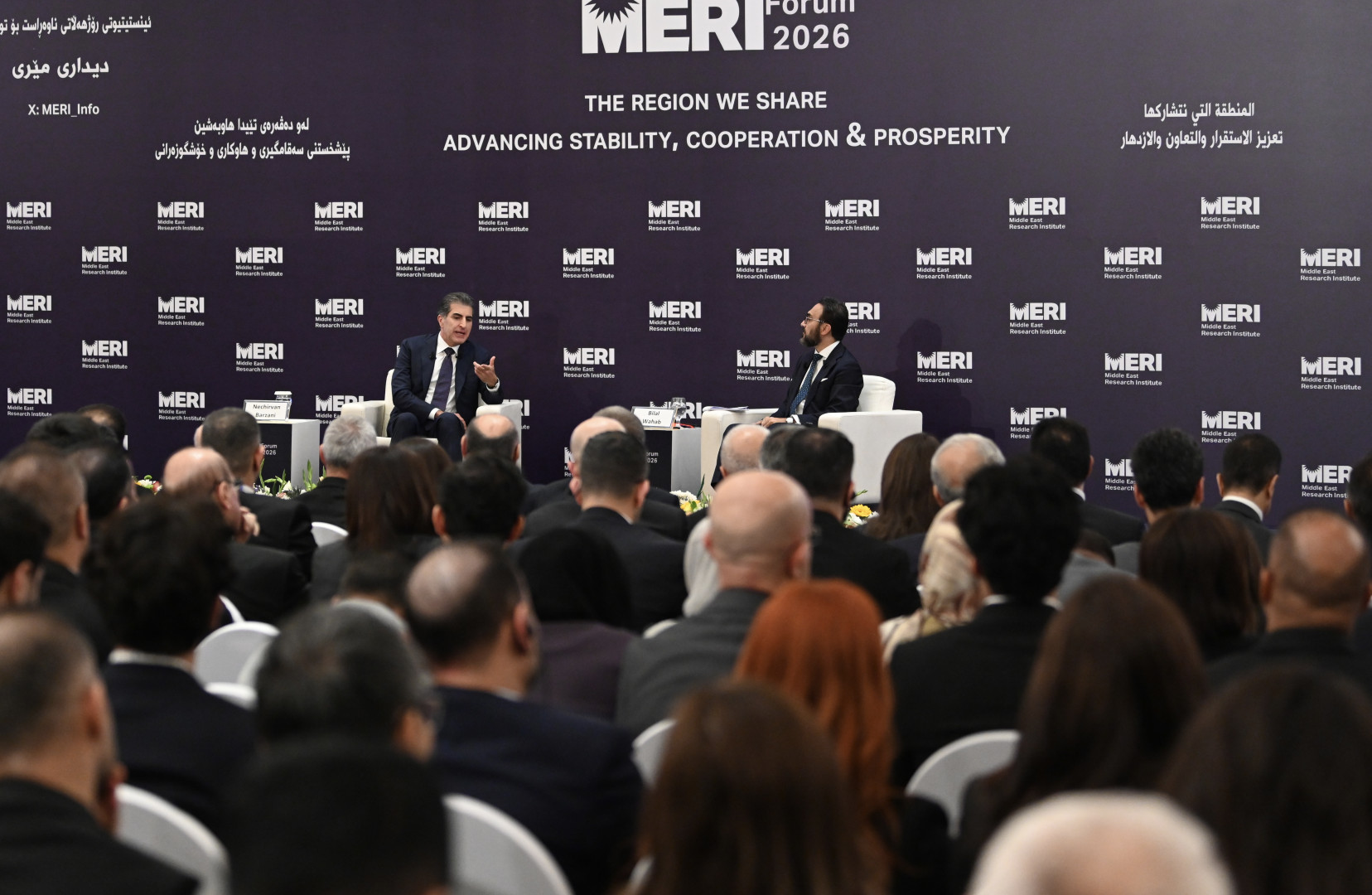
President Nechirvan Barzani took part in a panel discussion at MERI’s annual forum. During the discussion and in response to several questions, he addressed a range of issues concerning the Kurdistan Region, Iraq, and the wider region.
Moderator: There was a war in April. Unfortunately, Erbil was targeted by drones, so we have to discuss that. At the same time, I would also like to discuss Iraq, as previous guests, including the former prime minister, have done. Finally, I would like to discuss the Kurds and the Kurdish cause in all four parts of Kurdistan and across the region. However, there is one question that I think has arisen for all of us. We heard something a short while ago, but I believe more than 80 per cent of the audience did not understand what it meant. What is the story behind the “Brno”? What did Bafel Talabani mean when he mentioned it?
President Nechirvan Barzani: I believe that, at the conclusion of his remarks, Bafel Talabani stated, “I still want my Brno,” didn’t he? The Brno rifle is a matter between Mr. Bafel Talabani and President Barzani. At a meeting attended by all three of us, Mr. Bafel made this request to President Barzani. As you are aware, the Brno symbolizes the beginning of the Kurdish revolution, which began in 1961. Mr. Bafel told President Barzani that he wished to receive a Brno as a gift, and President Barzani agreed. I believe Mr. Bafel is now renewing his request and seeking to receive it at the earliest opportunity. Indeed, all of us will remind President Barzani of it, and I believe the request will be fulfilled. That is the story behind the Brno.
Moderator: Now that almost all of us have understood the story, it is good to have such matters clarified. As artificial intelligence noted, you have had a busy year as President of the Region, as a Kurdish political leader, and also in your personal capacity, through your own character and relationships. We can therefore ask you questions from all three perspectives. The Middle East is facing an extraordinary situation: the war involving the United States, Israel, and Iran; the situation in the Strait of Hormuz; and the international economic problems that have been discussed. Is this a temporary crisis, another war like previous ones, or do you believe we are at the beginning of a new phase in the politics and stability of the Middle East?
President Nechirvan Barzani: It is certainly the beginning of a new phase in the region. What has begun is not a temporary situation that will simply come to an end. As Kurds, we undoubtedly have opportunities, although there may also be threats. But I believe we can see far more opportunities than threats for the Kurdistan Region and for the Kurds in general. That is my view.
Moderator: Could you explain the threats? What are the three biggest threats facing Iraq and the Kurdistan Region?
President Nechirvan Barzani: The greatest threat facing Iraq at present may be economic: the state of the economy and the direction in which Iraq is heading economically. As you are aware, Iraq relies heavily on oil exports, with more than 90 per cent of its revenue dependent on oil, and the Strait of Hormuz is currently the only practical route for exporting it. This economic issue is among the major challenges facing Iraq as a whole. That is the first threat.
Moderator: And the other threat?
President Nechirvan Barzani: Another major challenge is the overall policy approach in Iraq, including the Kurdistan Region as part of the country. Will Iraq act as a sovereign state? Will Iraq maintain relations with its neighbours? Will Iraq have good relations both within the country and internationally? I believe this is among the greatest challenges for Iraq and for the Kurdistan Region. Iraq must make a serious effort to act as a sovereign state and to establish the best possible relations with its neighbours and the international community.
Moderator: Those are the threats. What are the opportunities?
President Nechirvan Barzani: There are many opportunities for Kurds. Naturally, opportunities exist for the Kurds, but they must be considered in light of the circumstances and characteristics of each country in which Kurds live. There are opportunities for Kurds in Türkiye and Syria, and even in Iran. Kurds can take advantage of these opportunities and work to turn them into openings for resolving issues.
Moderator: I would like to examine these opportunities in greater depth, country by country, because when we read the news, there seems to be very little hope. Analyses of the Kurdistan Region, Rojava, the peace process in the north, and the situation in eastern Kurdistan and Iran are often negative. Yet you say there are opportunities. Let us begin in the north. In your assessment, how serious is the peace process between the PKK and the Turkish government, and how great is the risk that it could go off course?
President Nechirvan Barzani: My respected colleague Mr. Tuncer Bakırhan will be taking part in a panel tomorrow and will be able to speak about this in detail, but I will share my own perspective. In the Kurdistan Region, we have repeatedly asked whether this is a serious process or not. The criteria for judging its seriousness are well known and clear. Personally, based on what I observed in my meetings with President Erdoğan, and even before I met him, I was not entirely certain whether the process was serious. However, over the past two years, what I have witnessed from President Erdoğan has convinced me of its seriousness. What I have seen in İmralı, and what I understand from Mr. Abdullah Öcalan, also points to the same commitment. Our friends in the DEM Party are closely involved and have likewise committed themselves to this process. I believe the process is moving forward in a serious manner, although some may point out that progress is slow. In my view, this is understandable. We are speaking of forty years of conflict, forty years of war, forty years of misunderstanding and denial, and forty years of being told that a group of people does not exist. We cannot expect all of these problems to be resolved overnight. Yet consider what has been achieved: over the past two years, even if nothing else had been accomplished, mothers there have been spared the loss of their children, and lives have not been lost. That is no small achievement. A process has been under way for two years. It is advancing gradually, but there is no war. Allow me to underline one point: even without any other achievements, the absence of war, killing, and renewed conflict is in itself a major accomplishment. I regard this as a serious process. The steps may not be as swift as we would wish, but it is moving along the right path and in the right direction.
To illustrate why we support the process and consider it serious, I once told President Erdoğan, “Mr. President, the world has changed considerably.” He asked, “What has changed?” I replied, “Consider this: we Kurds are now praying for Mr. Devlet Bahçeli’s health and expressing our hope that he recovers.” At that time, Mr. Bahçeli was ill and in hospital. I explained that this was a sign of change and reflected how seriously we view this process and how strongly we hope it will succeed.
Moderator: What role does the Kurdistan Region play, and how does it help?
President Nechirvan Barzani: When I refer to the Kurdistan Region, I mean the entire Region, including both Erbil and Sulaymaniyah. Our role is a supportive one. We are assisting the process. This does not necessarily mean that we are acting as mediators, but we stand ready to do whatever both sides request of us and whatever falls within our responsibilities as the Kurdistan Region, as we have already done. I would prefer not to go into the details of what has been done, as it is better not to discuss them publicly. However, we have taken the steps required of us in relation to Ankara and Qandil, and we will continue to do so. As you are aware, the Turkish parliament has passed legislation, and the Turkish National Security Council met on this issue today or yesterday. We must be patient with this process, and considerable patience will be required. I believe it is moving along the right path towards resolving the problems.
Moderator: If the problems are resolved, what would the Kurdistan Region gain?
President Nechirvan Barzani: It would gain a great deal. The fundamental policy of the Kurdistan Region is that these issues should be resolved within each country, in accordance with that country’s particular circumstances and the geography in which the Kurds live. If this issue is resolved, I believe a new phase will begin for the Kurdistan Region as well, both in its overall relations with Türkiye and in terms of solidarity with, and support for, our Kurdish brothers and sisters in Türkiye.
Moderator: So there is one dimension for the Kurdistan Region and another for Türkiye itself?
President Nechirvan Barzani: There is a dimension for the Kurdistan Region and another for Türkiye. Allow me to add that Türkiye itself would enter a far more significant phase. It is not only the Kurds who would benefit. If this problem were resolved, Türkiye would move from its current situation into a very different phase, enabling it to play its natural role in the region. Resolving this issue would be a tremendous achievement. Indeed, if anyone deserves a Nobel Prize for resolving it, it is the person who succeeds in doing so. In my view, the first person deserving of it would be President Erdoğan.
Moderator: If this peace process would benefit the Kurdistan Region, the Kurds in Türkiye, the Kurdish cause, and Türkiye itself, who would benefit if it failed? Who might derail it?
President Nechirvan Barzani: That is a rather delicate question. What matters is that we all remain committed to helping the process succeed and do not give an opening to those who do not wish to see it succeed. Those who oppose its success are opponents of the Kurds and of Türkiye itself.
Moderator: Many events have taken place in Rojava over the past twelve months. How do you assess those events? More importantly, how do you assess the outcome that has now been reached, with representatives from Rojava also present here?
President Nechirvan Barzani: If we assess what has been done realistically, I would commend and congratulate the people in Rojava. What they achieved was not easy, but they acted pragmatically. They understood the situation realistically, and it may not have been possible to achieve much more than they did. As I have said, the model of the Kurdistan Region in Iraq cannot simply be implemented in Syria. The geography is different, and Syria’s social composition is different. The same model cannot be applied there. During my visit to Syria, and from what I observed of Syrian President Ahmed Al-Sharaa, I did not gain the impression that he was opposed to the Kurds. We discussed this issue. The steps we are now witnessing towards integrating the security forces appear to be progressing well. There has also been progress on education, an issue of great importance to our friends there and to the Kurds in general. However, in my view, we can speak of full progress only when the rights of the Kurds and of other components are enshrined in Syria’s permanent constitution. Syria is not exclusively an Arab country; it is home to Arabs, Kurds, Druze, and Alawites. What matters is ensuring the rights of all these components within a unified Syria. The Kurds are part of that framework. What our brothers and sisters have achieved there so far is a positive development. It is also very important for all Kurdish political forces to maintain a unified position and present a common message in Damascus. This will help ensure that the rights of the Kurds are protected in Syria’s permanent constitution. My assessment of the current Syrian administration, and of President Ahmed Al-Sharaa in particular, is that they wish to resolve the outstanding issues.
Moderator: That is an important point, because you are known for understanding people and reading their character. When you say that Syria’s president has no issue with the Kurds, that is a significant assessment.
President Nechirvan Barzani: Even symbolically, the message he conveyed through the protocol and arrangements for receiving us was that he had no problem with the Kurds. When we landed at Damascus airport, we were welcomed in Kurdish in a message sent by the President himself. Kurdish and Iraqi flags were displayed everywhere. Even the menu was written in Kurdish. He wanted to show that he had no objection and that he sought understanding between us. Syria has many problems of its own. The country does not have an easy path ahead; it is in a very difficult situation and has been devastated. Rebuilding Syria will take time. I am pleased that our Kurdish brothers there, including Mr. Mazloum and his colleagues, approached the issue realistically. At times, people have aspirations, but there is also a reality that must be addressed. They dealt with the situation as it is, and I believe this realism is very important for the Kurds. We should not underestimate or dismiss what they have achieved. It is significant that they have made progress in a country that previously did not recognize their Kurdish identity or regard them as Syrian citizens. Now, around 13,000 people may be integrated into the Syrian army, while approximately 17,000 may gradually enter the security institutions, and discussions are under way on how Kurdish students can pursue their education. These are serious developments, and we should recognize them as progress.
Moderator: This assessment matters because some Kurdish media voices argue that these achievements fall short of the sacrifices made, the struggle, and the martyrs in Rojava. Your assessment, however, emphasizes reality. You also said that the situation of the Kurdistan Region in Iraq differs from that of Rojava in Syria. What can Rojava learn from the Kurdistan Region’s experience, and what mistakes should it avoid repeating?
President Nechirvan Barzani: I have discussed this with General Mazloum before. I told him that there are things they should learn from our experience. We have made mistakes, and we must acknowledge them. They should learn from us and avoid repeating those mistakes. I do not need to give examples here, but we have discussed this and agreed that they must be realistic. I would like to offer my perspective: wherever Kurds live, they must realistically assess their situation in the country in which they live. What is possible, and where are the limits? In 2005, was the Iraqi Constitution a small achievement for the Kurds? No. If you look at Iraq’s history, the Constitution that recognized the rights of the Kurds was a major achievement. It came about through the efforts of many people, particularly the late President Mam Jalal and President Barzani, may he live long, and all political forces supported it. When President Barzani returned and was asked about the achievements of the Constitution, he stated, “This is not everything we wanted, but what we have achieved is not insignificant; it is substantial.” It took us into a different phase. The document exists, the Iraqi people voted for it, and these rights are enshrined in Iraq’s permanent Constitution. These are realities that Kurds everywhere must assess in light of the circumstances of the countries in which they live.
Moderator: Let us turn to Iran and eastern Kurdistan. The war this spring brought the situation in eastern Kurdistan into international focus. Some say that the Kurdish opposition groups in eastern Kurdistan missed an opportunity by not participating in the war. Others say it was right not to participate, because eastern Kurdistan might otherwise have suffered and the Kurdistan Region might have been drawn into the conflict. How do you view these two positions?
President Nechirvan Barzani: I wish to be very clear on this issue. Unfortunately, the Kurdish opposition forces in eastern Kurdistan acted in a highly irresponsible manner and placed the Kurdistan Region in an extremely difficult position. Their statements and activity on social media gave the impression that they were about to move into Iran. This exposed the Kurdistan Region to a very serious danger, and their conduct towards the Kurdistan Region of Iraq was highly irresponsible. From the beginning of the war, our policy was clear. We remained in daily contact with Sulaymaniyah, with my esteemed brother Mr. Qubad, who is present here, and with Mr. Bafel. Our policy was that the Kurdistan Region must not become part of this war. It was not our war. Iran is a neighboring country, and we share approximately 600 kilometres of border with it. The Kurdistan Region could not and cannot be used as a place from which to threaten Iran. An armed force cannot view the Kurdistan Region as a safe haven and then operate from its territory to threaten a neighboring country. That would be unacceptable under international law, Iraqi law, and the Constitution. Even if it had appeared to serve Kurdistan’s interests, it should not have been done. Regrettably, those groups presented themselves as heroes of the war, but we knew from the beginning that such an approach was not possible. Our position was clear. The Kurdistan Democratic Party and the Patriotic Union of Kurdistan controlled the borders from the first day of the war, deployed forces, and made it clear that we would not permit any such action to be taken from the Region.
Moderator: Bafel Talabani referred to the same point in his statements. It appears that you agree on protecting this experience when it comes to strategic issues.
President Nechirvan Barzani: The war was a very important test for us, and we passed it successfully through our coordination. On strategic matters, including those concerning Baghdad, we worked together to safeguard the Kurdistan Region’s status and institutions, despite our disagreements and the many difficulties.
Moderator: What opportunities are there for eastern Kurdistan?
President Nechirvan Barzani: Opportunities will arise for eastern Kurdistan. We have made efforts before and have not remained silent on this issue. However, as I said, any solution must reflect the particular circumstances of each country. At all our meetings in Tehran, this issue has been part of our discussions.
Moderator: What is Tehran’s stance after the war? Has Tehran’s view of the situation of the Kurds in eastern Kurdistan changed?
President Nechirvan Barzani: I believe they have not yet reached a final conclusion. However, as to whether they are giving the issue consideration, I believe they are treating it with great seriousness. My recommendation is, first, that the Kurdish issue is a serious matter in these countries and cannot be resolved through neglect or denial. Second, any solution must reflect the particular circumstances of each state. We cannot prescribe a model and ask Iran or Türkiye to adopt it. Rather, the issue must be addressed within each country in a manner that takes full account of its own circumstances. A policy of denial cannot be sustained indefinitely.
Moderator: Let us turn to Iraq. How dangerous is the situation in Iraq following the withdrawal of US forces? People have been worried since the United States withdrew. Who will protect the Kurdistan Region? What is your position on a US withdrawal?
President Nechirvan Barzani: Prime Minister Mohammed Shia al-Sudani has addressed this issue in detail, but permit me to share my own view. First, US and other forces came to Iraq in 2014, when ISIS emerged, at the formal invitation of the Iraqi state. They deployed under an official document, and one of Iraq’s conditions was that the United States would lead the coalition. A lot has changed since 2014. It is entirely understandable that, after ten to twelve years, Iraq may no longer require a coalition of such a scale. Its continued presence can weaken confidence and deter investment in Iraq. Iraq must exercise its sovereignty while maintaining bilateral relations with these countries for security cooperation. We extend our sincere appreciation to the forces that came and supported us. Today, however, Iraq has reached a stage at which it is capable of meeting its own challenges. Regarding the protection of the country, Iraq and the Kurdistan Region require an air-defense system. To the best of my knowledge, Iraq and the United States have an agreement identifying approximately 52 locations across Iraq for the deployment of air-defense systems, including in the Kurdistan Region, as all of Iraq needs such protection. Second, weapons must be placed exclusively under state authority. Iraq must not be used as a platform to threaten neighboring countries or the Kurdistan Region. This is a fundamental element of sovereignty: how can weapons exist outside the control of the state? On the ground, the Iraqi army, the Peshmerga, and the Popular Mobilization Forces made great sacrifices and shed their blood to defeat ISIS. The Peshmerga and the people of Kurdistan remain ready to defend their land. In addition to air defence, the most important factors in protecting the Kurdistan Region are diplomacy, constructive dialogue, and agreements with neighboring countries.
Moderator: You have been negotiating with Baghdad for more than twenty years. What have you learned from that experience that you did not know in 2005?
President Nechirvan Barzani: In 2005, we drafted the Constitution with great hope and aspiration for a federal and democratic Iraq founded on citizenship, not only for the Kurdistan Region, but for all of Iraq. We believed that the Constitution would carry Iraq from one phase into an entirely different one. What we have learned is that the central problem lies in the failure to implement the Constitution. The disagreement between Erbil and Baghdad is not a personal matter, nor can it be attributed solely to a particular prime minister or any other individual. It relates to the system through which Iraq is governed. On paper, Iraq has a federal system, but in practice that system is not federal. A number of laws inherited from the previous era remain in force, requiring Iraqi ministers to deal with the Kurdistan Region on the basis of those old laws. If we wish to build an Iraq in which all of us can live in peace, the Constitution must be implemented. That is the key to resolving the problem. The Constitution entails both rights and obligations. Since Iraq is defined as a federal state, a serious dialogue must begin on implementing the Constitution in full. The priorities are clear: a fair distribution of natural resources and revenues, and the establishment of a Federal Supreme Court. If there were laws governing oil and gas and the distribution of revenues, many disputes would be easier to resolve. Kirkuk is certainly an important issue, and I will not address it here, but legislation on oil and gas and on revenue-sharing would reduce disagreements over the disputed territories. The Federal Supreme Court is of great importance for Iraq. If we wish to see an Iraq in which everyone feels a sense of citizenship, I believe the key lies in the Constitution.
Moderator: Following the elections in the Kurdistan Region, there has been some disappointment over the delay in forming a new cabinet. What initiative are you taking to bring the Kurdistan Democratic Party and the Patriotic Union of Kurdistan closer together and form a government?
President Nechirvan Barzani: It is true that a considerable amount of time has passed. I believe we have set a record, having taken even longer than Belgium to form a government. This is an unfortunate situation. The people of Kurdistan placed great trust in the political parties, and voter turnout was approximately 72 per cent, which is very high. These votes represent the trust that the people have placed in us. Our electoral and democratic system was established by our own choice and was not imposed upon us. Despite the delay in forming a government, it is encouraging that the positions of the two parties on strategic issues are not far apart and are, in fact, close to one another. Personally, I remain actively engaged in this issue. I heard Mr. Bafel Talabani state that we are in the middle, and I share that view. We held some productive meetings last week, and we hope to hold another constructive meeting this week or next week in order to reach a solution and form the government.
Moderator: An Axios report stated that you had mediated between Tehran and Washington. What can you tell us about that report?
President Nechirvan Barzani: In diplomacy, matters can sometimes be advanced through other channels. What was reported was largely accurate. We do not wish to exaggerate our role, but we did play that role. The initiative was received with appreciation in Washington, and the Iranian authorities also responded very positively to it.
Moderator: What message would you give young people for the next ten to twenty years? What would you tell them so that they remain devoted to their homeland?
President Nechirvan Barzani: Let us reflect on our history and consider where we came from and how far we have come. Our people have endured hardship, destruction, chemical attacks, and displacement in order to reach where we are today. We have brought ourselves to this point through both favorable and difficult times. My message to young people is this: please do not underestimate these achievements. You did not live through the suffering and the difficult periods endured by previous generations. What we have today is significant, and young people must carry that forward and build upon it. Not everything we have done has necessarily been right. There have been mistakes along this journey of fifty or sixty years. What matters is preserving this experience. It is about love and devotion to our land and homeland. Every family in this homeland has a story of pain and sacrifice. We must appreciate what we have today, despite all its shortcomings. I ask the new generation to carry this journey forward with a fresh outlook. This is an era of science, artificial intelligence, and technological progress, and our young people must prepare themselves for it. When I see these young people, I am filled with great hope that they understand the responsibilities placed on their shoulders and know what is required of them. I am confident that they can serve their country even better than we have.
Moderator: Your Excellency, thank you very much. I appreciate your time.
President Nechirvan Barzani: Thank you.