
 پەرلەمانی کوردستان
September 27, 2026
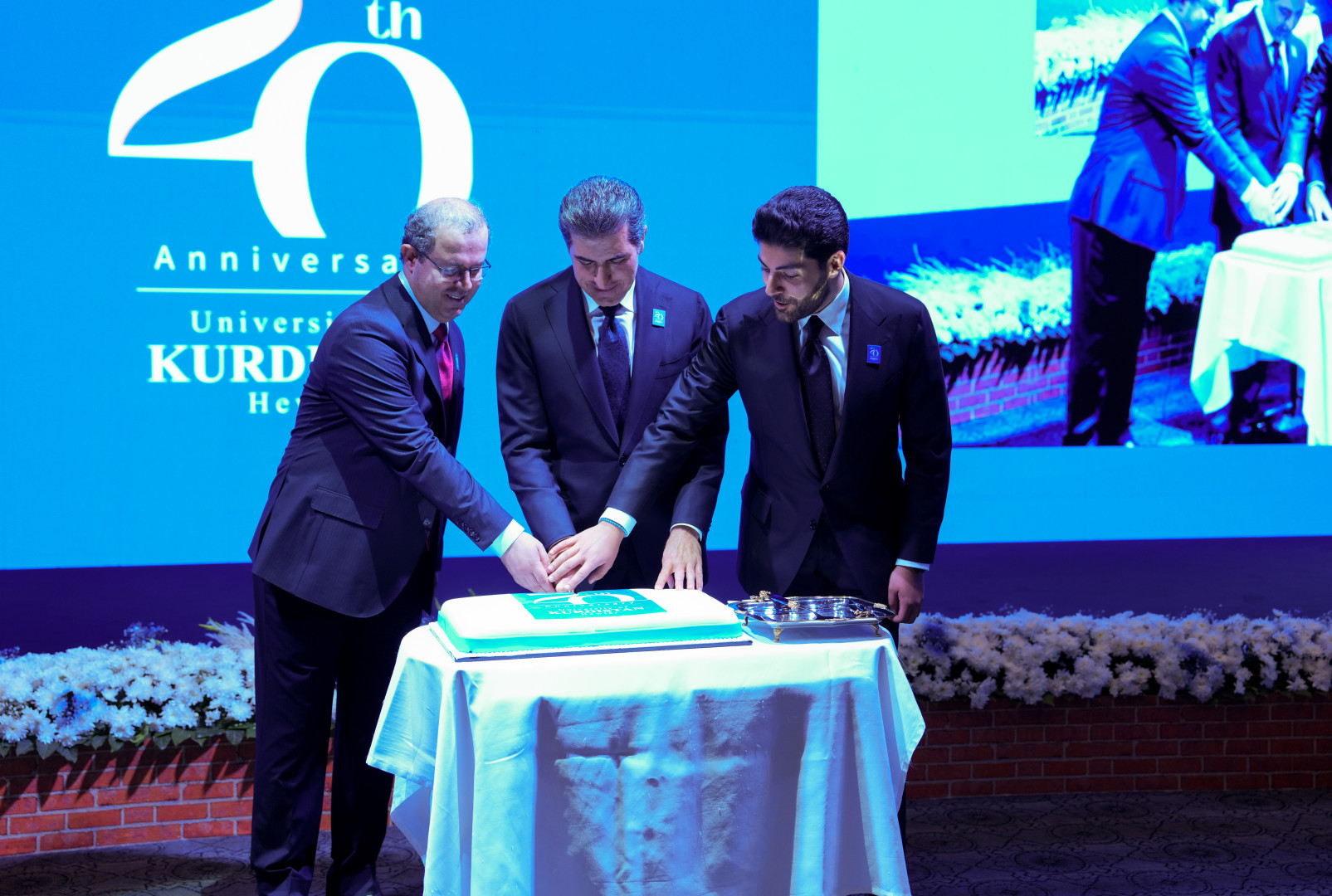
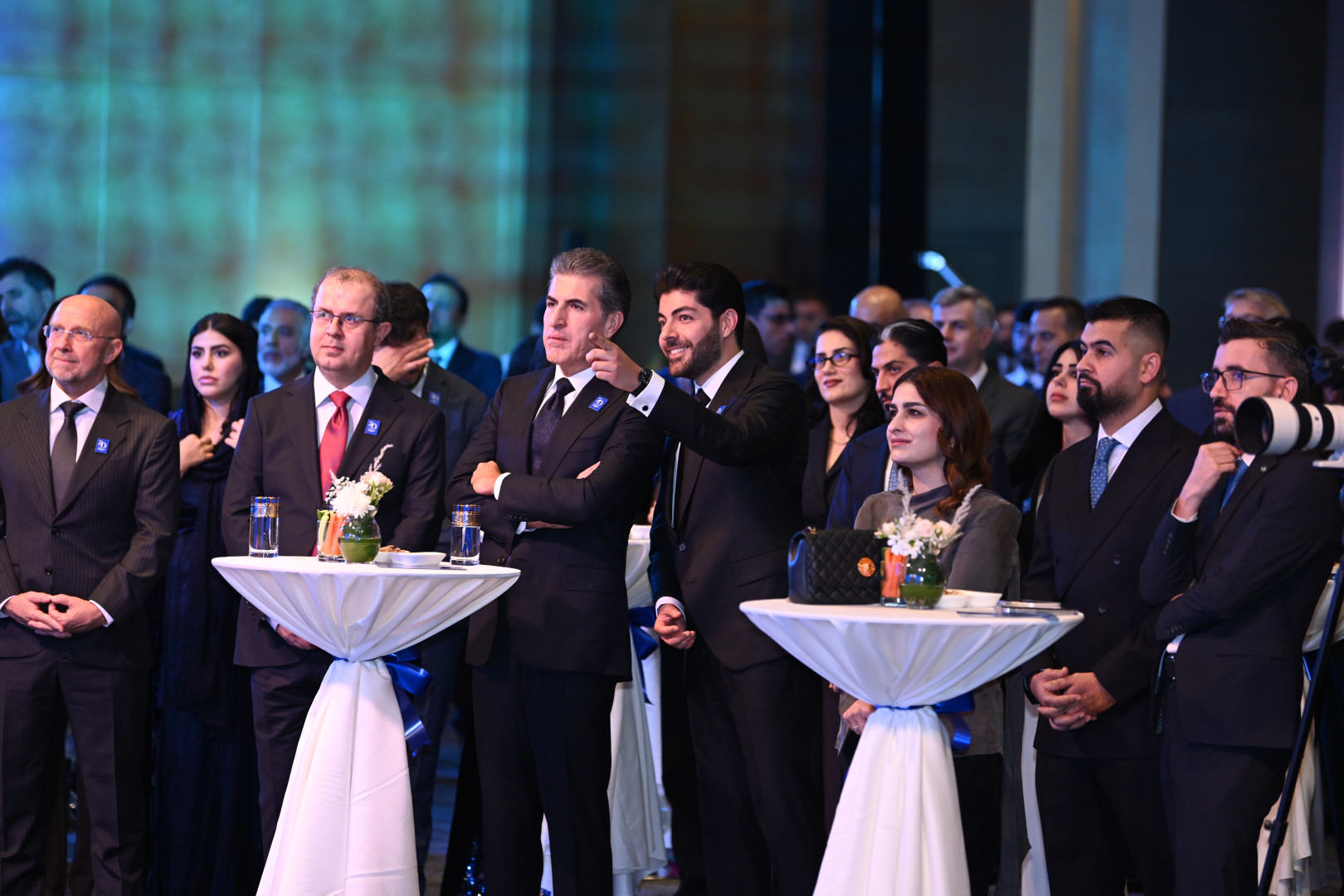
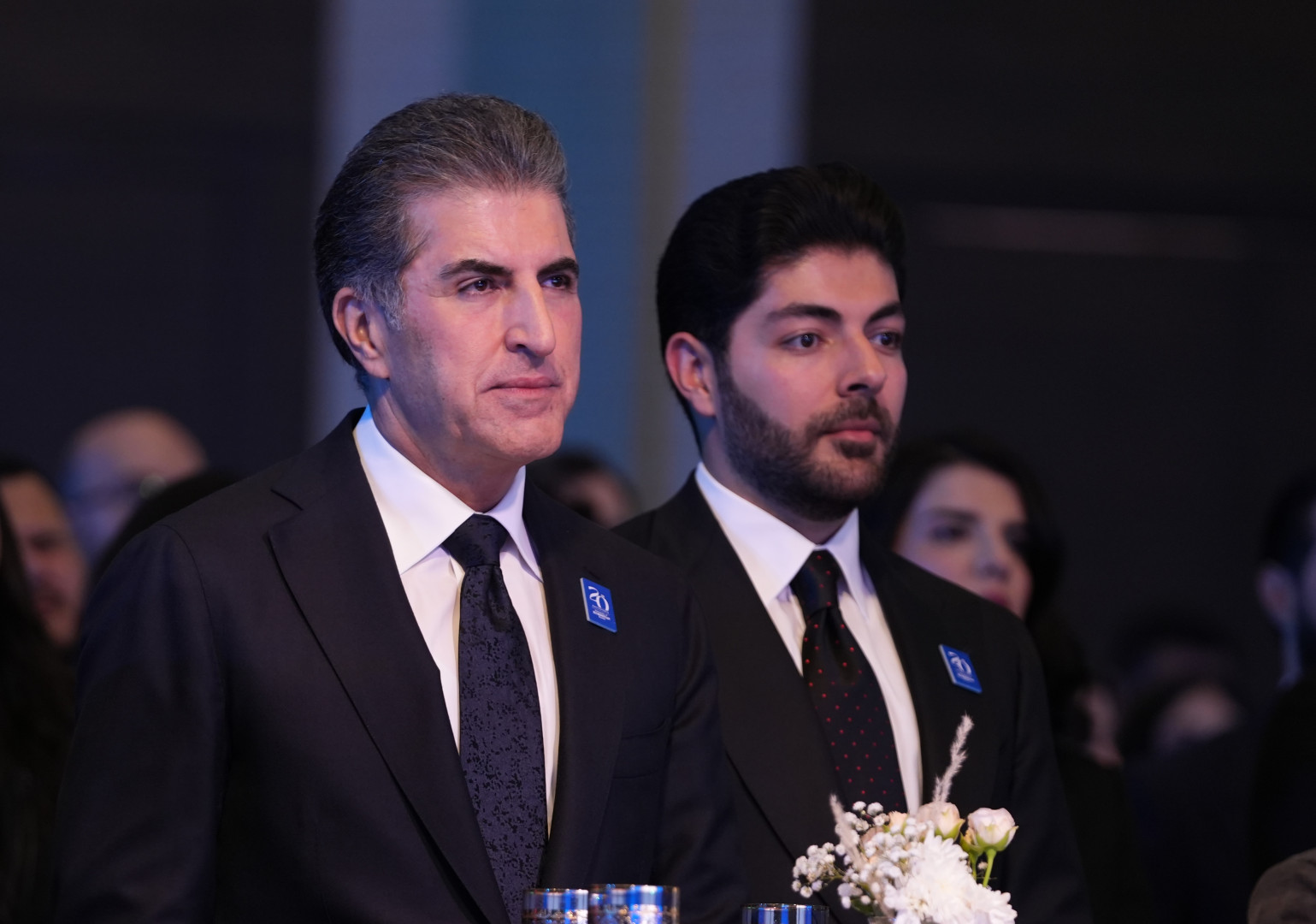
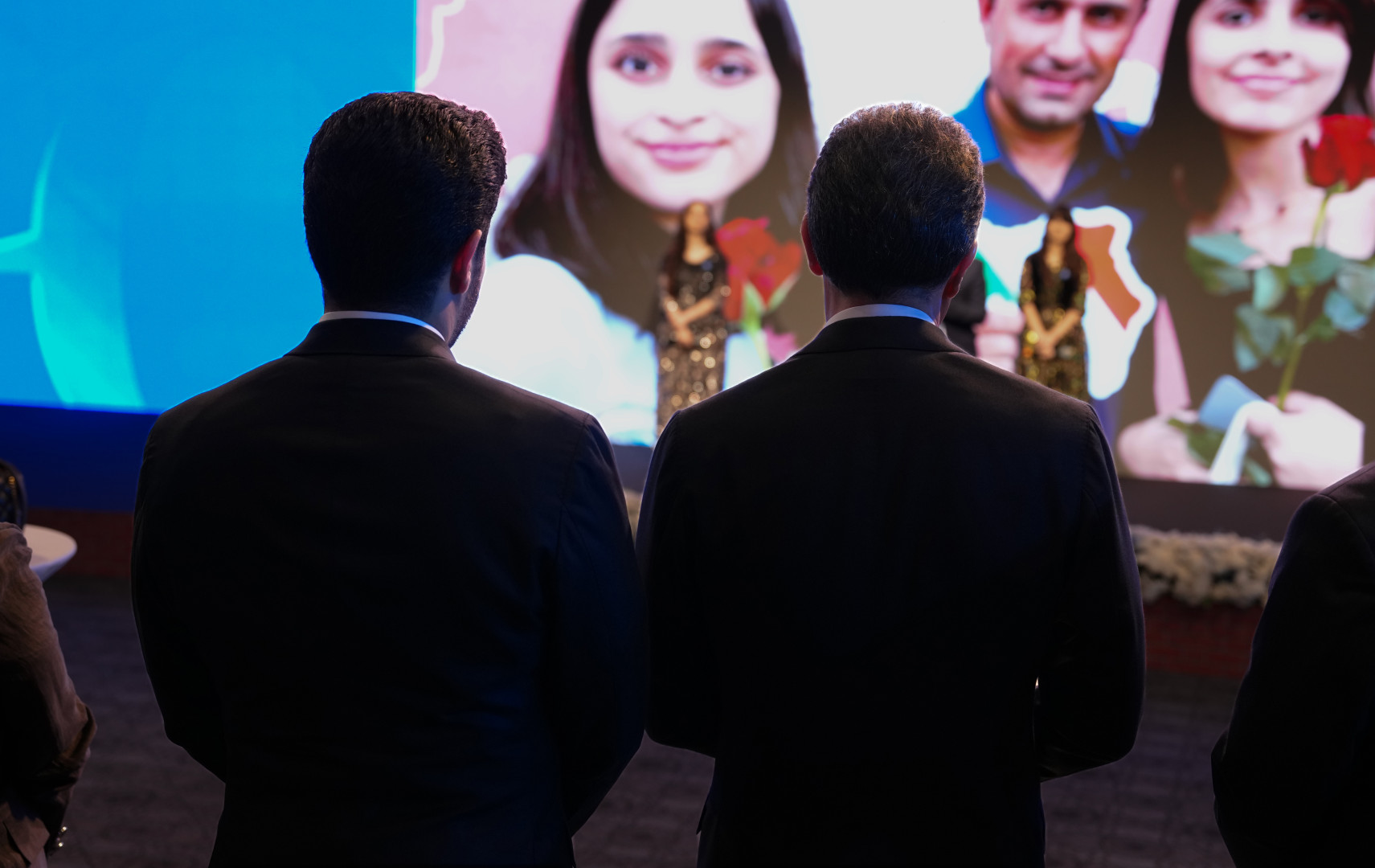
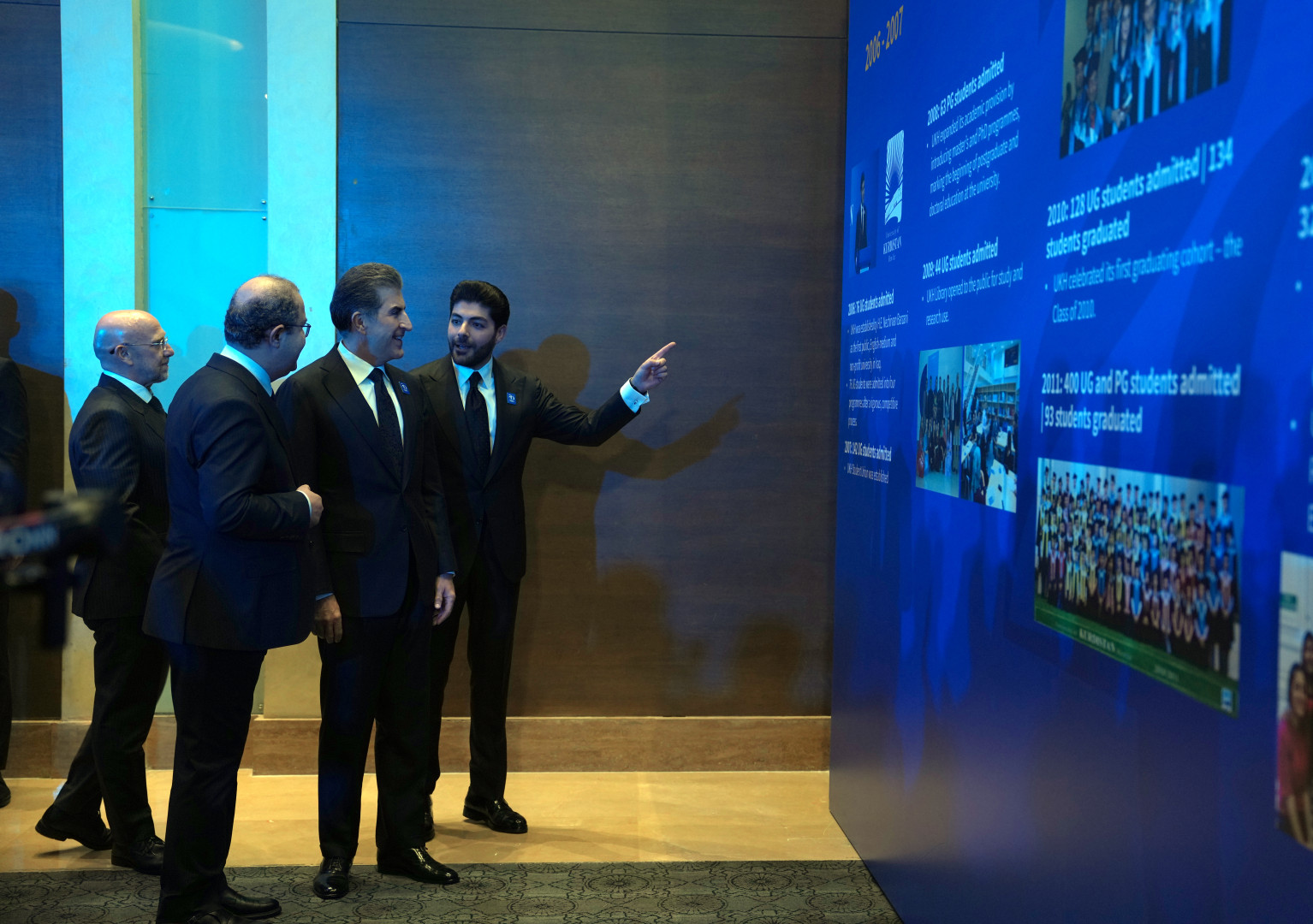
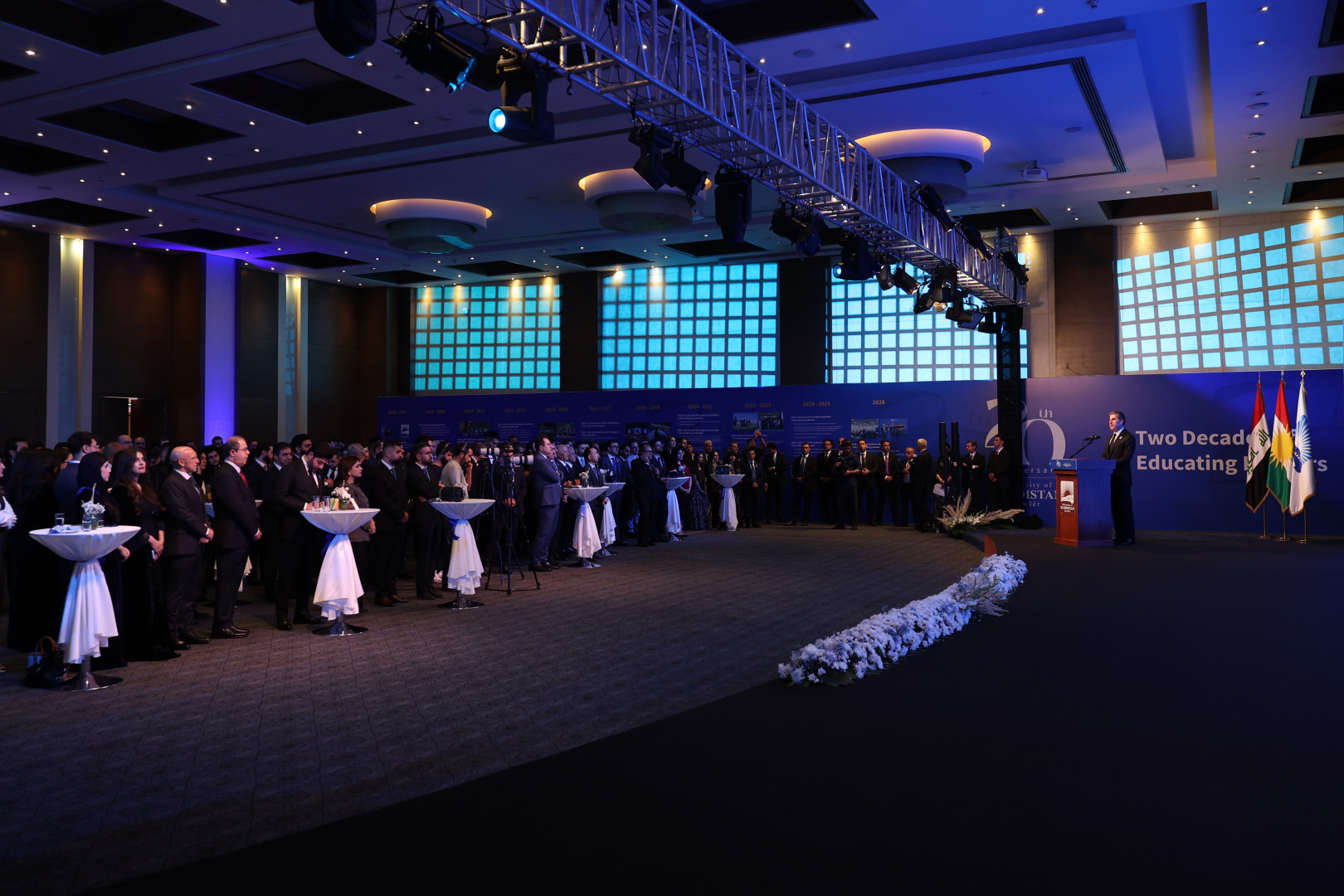
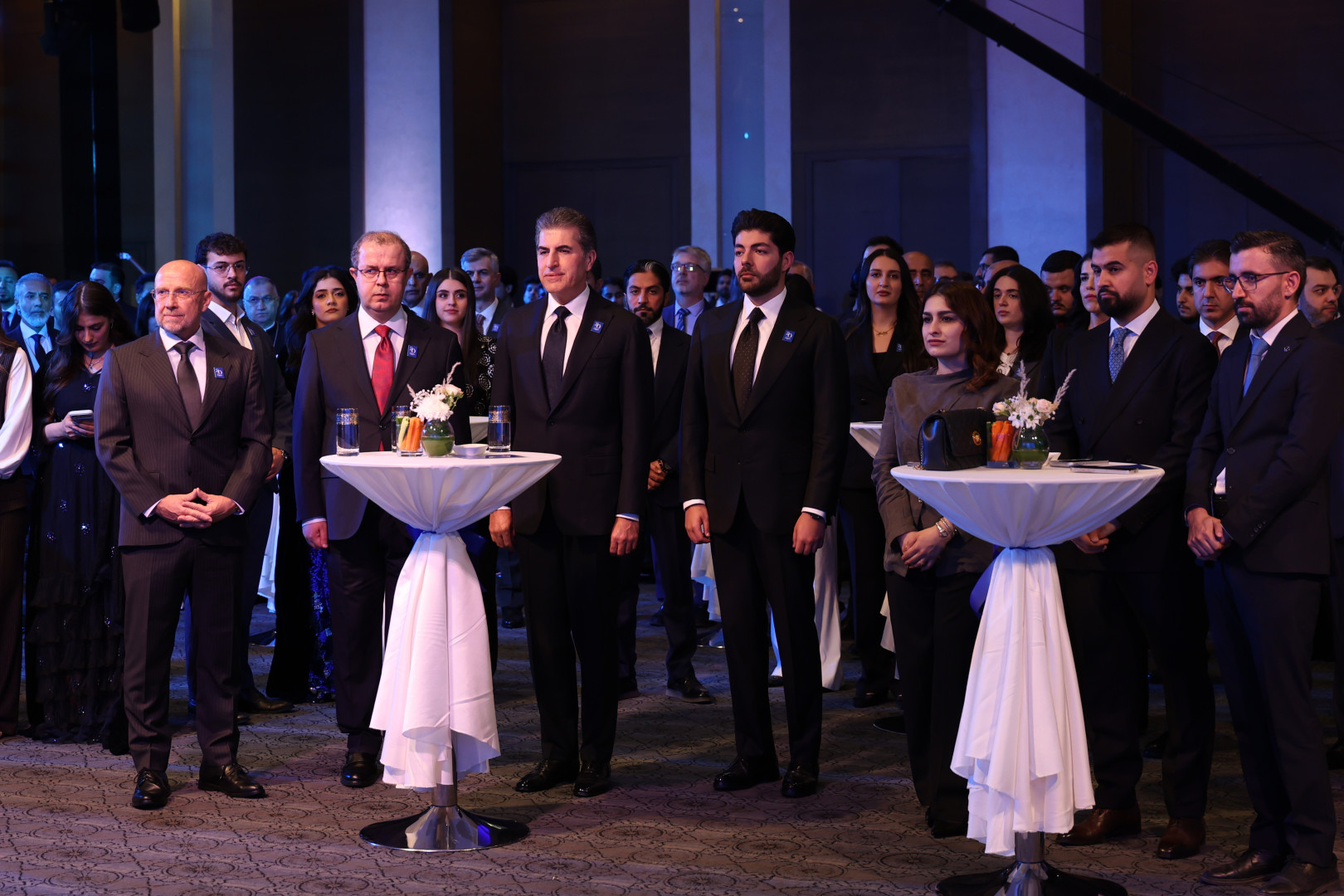
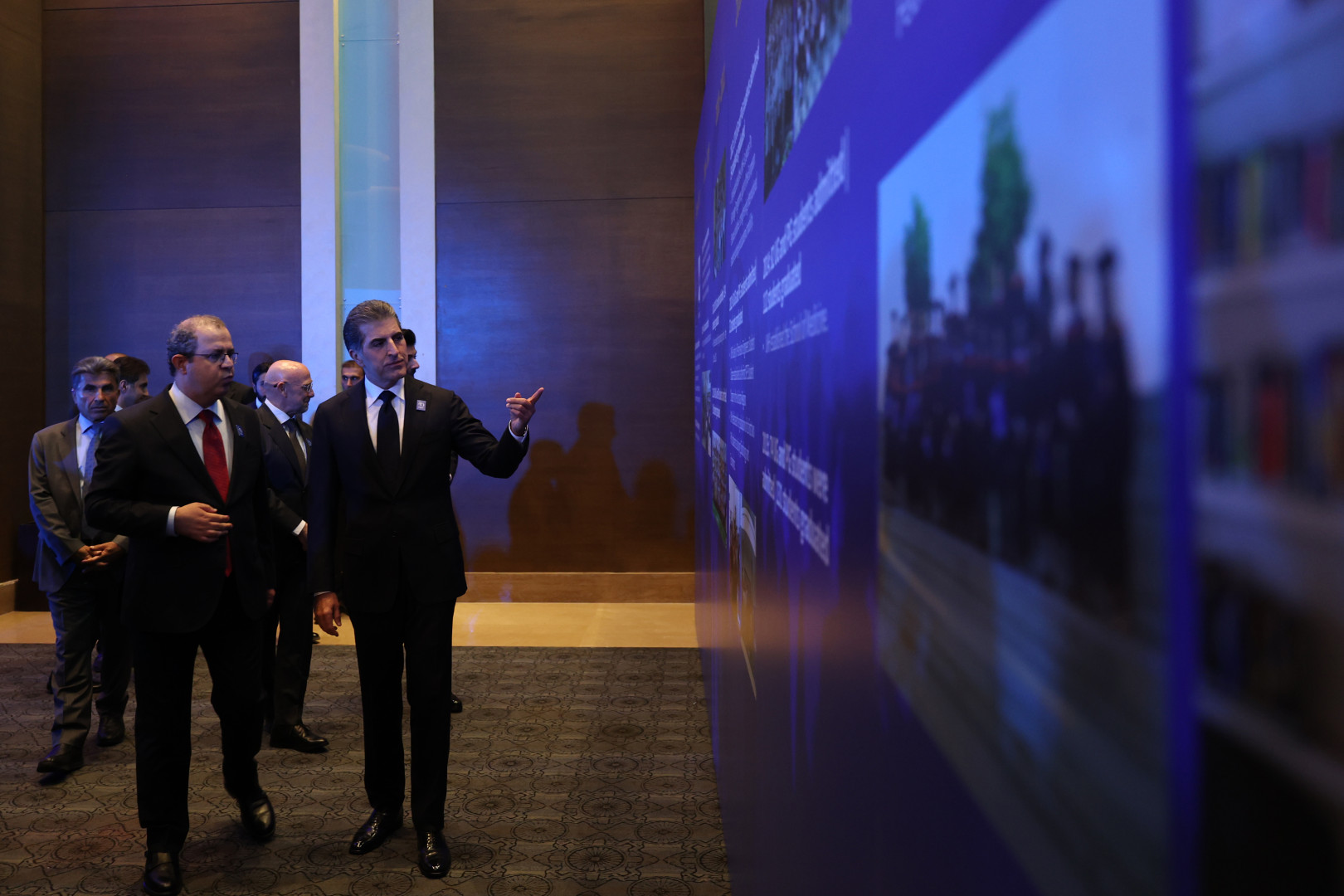
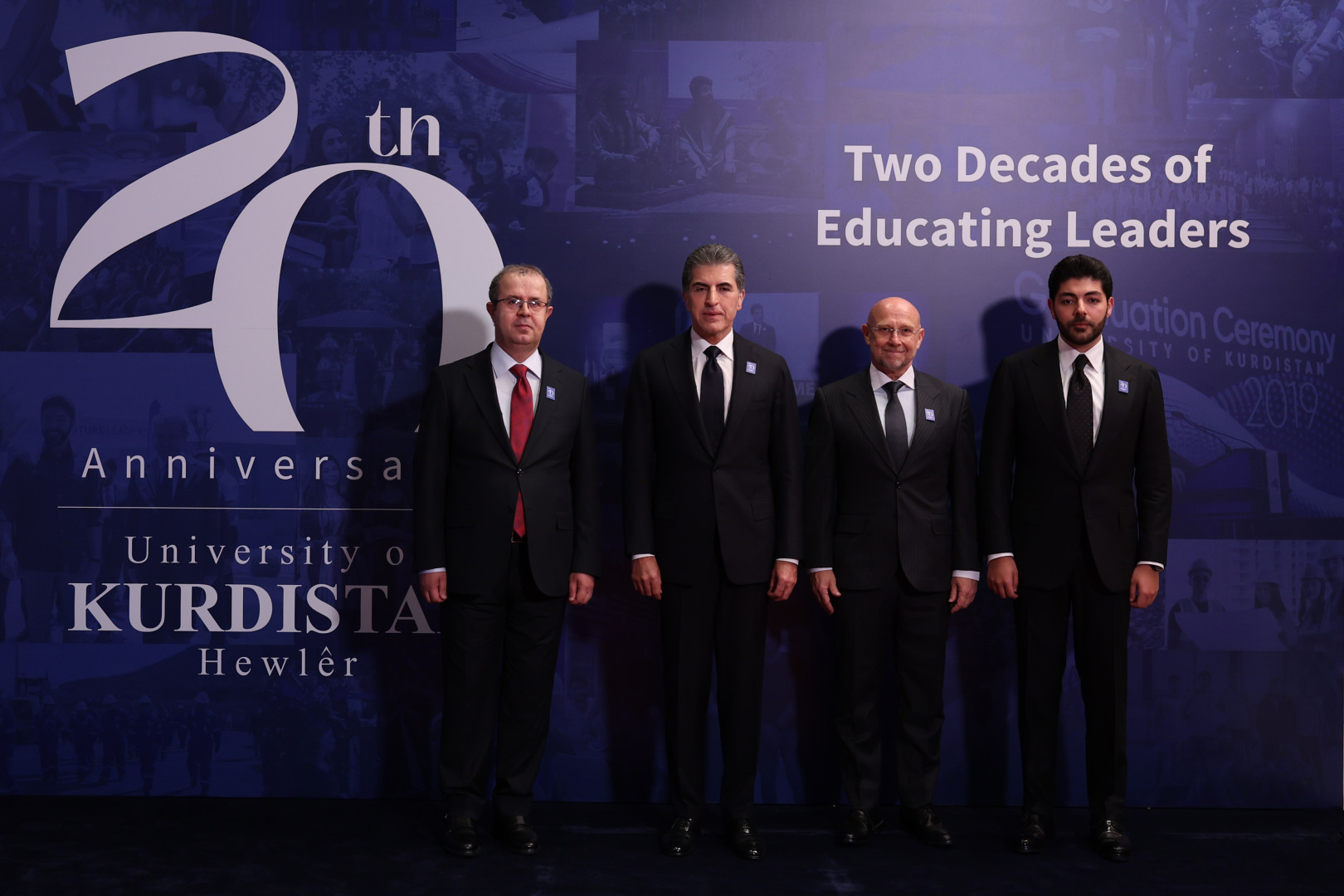
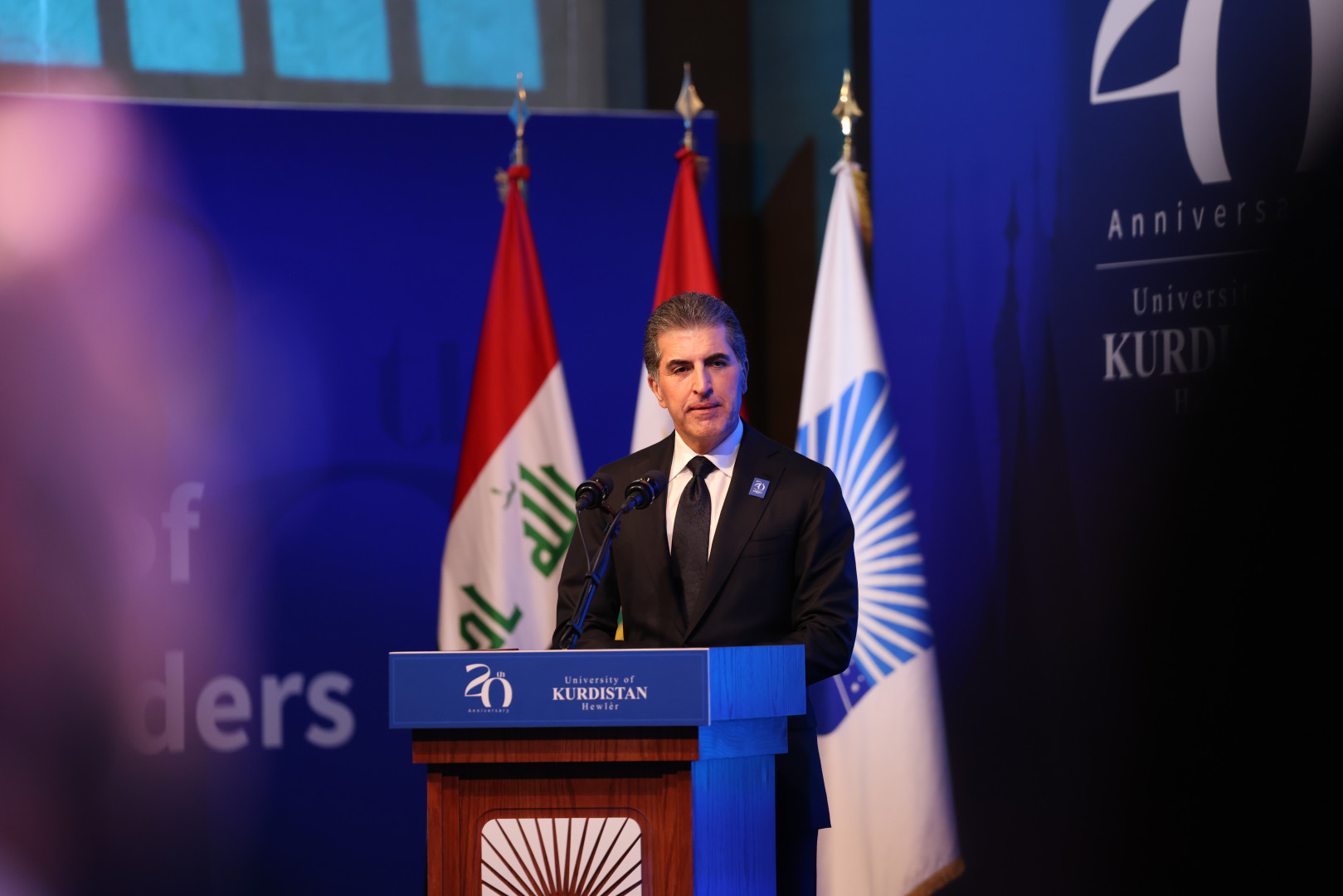
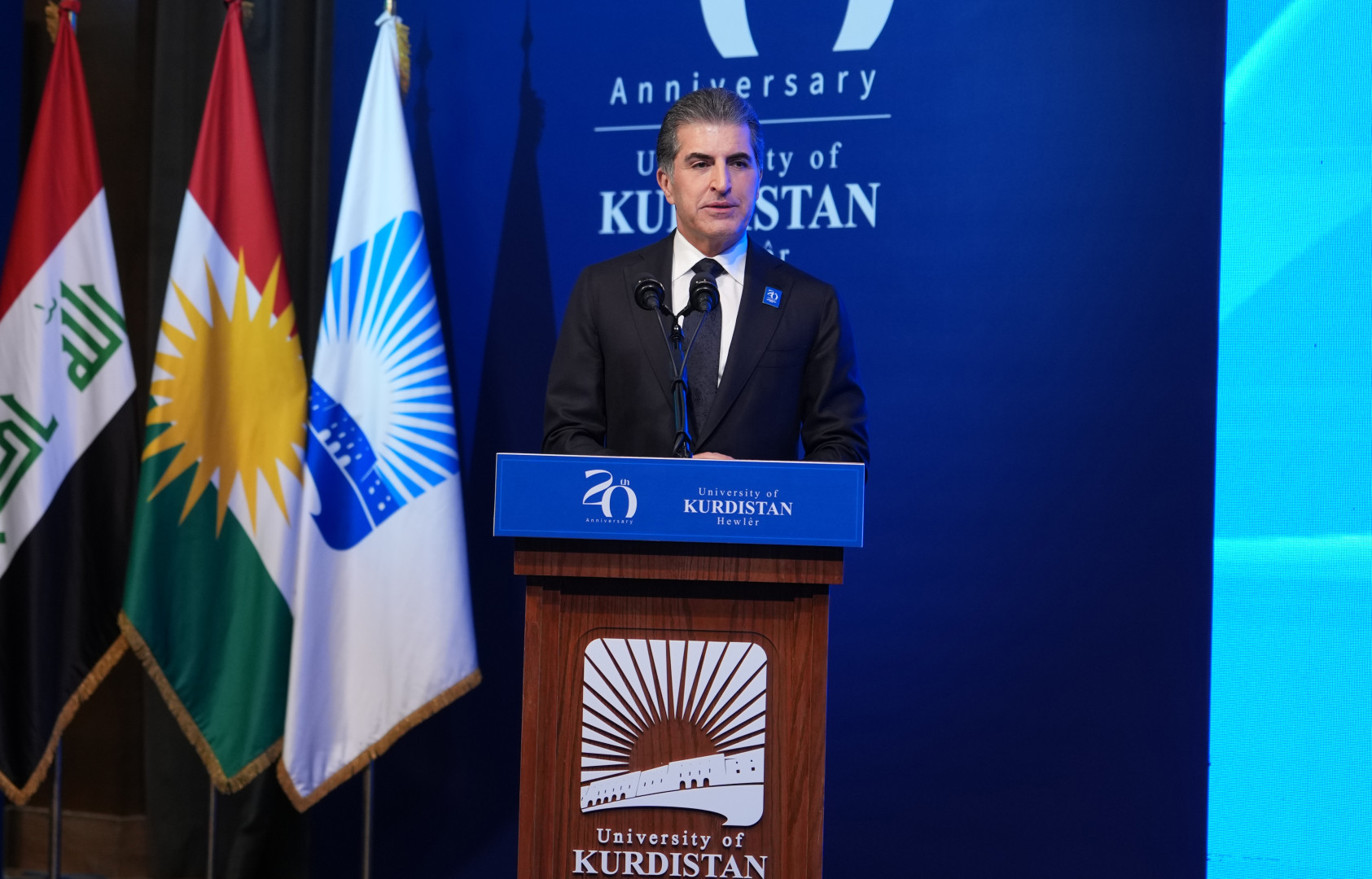
President Nechirvan Barzani attended a ceremony marking the twentieth anniversary of the founding of the University of Kurdistan Hewlêr, where he delivered a speech. The full text of his remarks follows:
Distinguished guests,
Members of the university,
Students, graduates, and dear friends,
Good evening.
I am pleased to be here with you this evening to mark the twentieth anniversary of the establishment of the University of Kurdistan Hewlêr.
Prior to Iraq's liberation in 2003, the Kurdistan Region's sole focus was survival, requiring us to devote all available resources and capabilities to this fundamental objective. Following Iraq's liberation, a renewed sense of optimism emerged among our people, giving us the opportunity to redirect our efforts toward development and nation-building. Twenty years ago, we started something new.
In 2006, the Kurdistan Region was entering a new phase of development. We began building infrastructure, strengthening institutions, and expanding our relations with the international community. At that time, I held a belief that has only grown stronger over time: that the most important investment we can make is in knowledge and in our country. For this reason, we established the University of Kurdistan Hewlêr.
When we founded this university, we had a clear and unwavering objective: alongside other universities in Kurdistan, to establish a new university that would become one of the best in Kurdistan, Iraq, and the region. We wanted a university where teaching would be in English, the language of modern science—a university connected to the world, committed to the highest academic standards, and respectful of independent thinking. Above all, we wanted our young people to learn how to think, to think correctly and objectively.
Distinguished guests,
After twenty years, there are many achievements we can take pride in and appreciate. The university should take pride in having graduated more than 3,700 young people of this country and in the influential role they have played in the reconstruction and development of Kurdistan.
Seventy-five percent of graduates have effectively entered the labor market, and ninety percent of this group have become a backbone of the private sector, alongside their strong presence in the public sector and in higher education. More than 150 graduates of this university have not only sought employment but have also become entrepreneurs, creating job opportunities for hundreds of others.
Across all governorates of Kurdistan, alumni of the University of Kurdistan Hewlêr play leading roles in development and institutional administration. Through their professional accomplishments, they have demonstrated that investing in modern education and empowering capable individuals is the most successful path to building the future of the country.
However, these twenty years have also taught us something that we did not fully understand in 2006: establishing an institution is an achievement, but building an institution that has the ability to learn, adapt, and endure is another achievement.
Over the past twenty years, the university’s journey has included both notable achievements and significant challenges. Some decisions were good, while others required reconsideration. The university has needed to learn, adapt, correct its course where needed, and keep moving forward.
We should not complain about the university’s past; rather, we must learn from it. An institution does not become strong by presenting itself as though it has made no mistakes. It becomes strong by identifying and correcting its mistakes. After twenty years, we can also see part of Kurdistan’s broader journey reflected in the university’s own.
Distinguished guests,
If you compare the Kurdistan Region of 2006 with the Kurdistan Region of today, you will see a significant difference. Today, we have achieved many things that once seemed far beyond our reach. We have built infrastructure and institutions, opened Kurdistan to the world, strengthened our international relations, and nurtured a capable new generation.
All of these would have been difficult for previous generations to imagine. However, our journey has not been without difficulties. We have faced terrorism and war, including the war against ISIS. We have opened our borders to large numbers of displaced people and refugees. We have endured economic crises, political disagreements, complex relations with Baghdad, and instability across our entire region.
Some of our challenges stemmed from broader regional conditions beyond our control. Other challenges, however, were of our own making. We must have the confidence to distinguish between the two. The lesson we have learned over these twenty years is not that we were right in everything. Because we were not.
The lesson is that progress depends on our ability to learn. What is beneficial must be preserved and strengthened. What is not beneficial must be changed. What has become outdated must be renewed and improved. And when the available options are no longer sufficient, we must have the courage and creativity to develop new ones.
This principle originates from the core of a university. If a university teaches its students to question assumptions, examine evidence, and think critically, then the university itself must remain open to criticism. Kurdistan must follow the same approach. We need a generation that respects the sacrifices and achievements of previous generations. However, respect must not mean silence.
We need a courageous generation, one with the boldness to question and correct mistakes. A generation that, when we make mistakes, can say: “You were wrong.” Criticism is not a threat to Kurdistan; rather, it is one of the greatest sources of strength for the country. Mistakes are opportunities to learn and a source of experience.
Today’s world is very different from that of 2006. Artificial intelligence is transforming education, science, governance, and the economy. Information that once required many days to obtain can now be accessed within seconds. In such a world, information alone is not sufficient. We need individuals who can distinguish between information and knowledge. Who can distinguish between repetition and analysis. Who, when they realize they are mistaken, can change their views. Who can hold different opinions without becoming hostile toward one another. And who can solve problems that we have not yet been able to resolve.
Twenty years ago, we asked: What kind of university does Kurdistan need? Today, I would like to reverse that question: Those educated at this university—what kind of Kurdistan can they help us build?
For twenty years, our graduates have entered government, business, science, education, and civil society. But my expectation goes beyond simply entering institutions. My expectation is that our graduates will improve institutions. Some of them should work to build the institutions that do not yet exist.
I hope today’s generation will never think our generation has discovered all the opportunities the Kurdistan Region needs. Because we have not discovered them all. We have brought Kurdistan to this point, and from here onward, we entrust it to you.
No generation inherits a Kurdistan free of challenges and problems. Our generation inherited a Kurdistan marked by oppression, war, destruction, and immense sacrifice. We tried to transform that legacy into stability, institutions, development, and new opportunities. Your generation will inherit a different legacy.
You will inherit what we have built: our achievements, our experiences, and also our shortcomings and mistakes. Your responsibility is neither to reject this legacy entirely nor to defend it uncritically. Your responsibility is to improve it. The same applies to this university and to all universities in Kurdistan.
The university must not spend the next twenty years trying to remain as we envisioned it in 2006. Rather, it must become a university that, even in 2026, we cannot yet fully imagine. It must generate knowledge and scientific advances that Kurdistan does not yet possess. It must help solve the problems we have not yet resolved. It must be connected to the best knowledge and science in the world, while maintaining a deep sense of responsibility for Kurdistan and its progress. It must always have the confidence to reflect upon itself, to transform, and to adapt to new circumstances.
Dear Students,
Distingueshed Guests,
Twenty years ago, establishing this university was our responsibility. But what this university will become over the next twenty years will increasingly be your responsibility. Preserve what is beneficial. Turn away from what is not. Learn from our achievements. And do not hesitate to learn from our mistakes. Do not let your respect for the opportunities our generation created stand in the way of the opportunities your generation must create.
The university was never intended to become a monument to its founders; rather, it was intended to become an institution capable of surpassing them. Perhaps the same must be said for Kurdistan.
Our greatest achievement will not be that future generations preserve exactly what we have built. Rather, it will be that they possess the knowledge, freedom, and confidence to build what we were unable to build. Our true success is not that you become like us; true success is that you become better than us and improve what we have not.
Congratulations on the twentieth anniversary of the establishment of the University of Kurdistan Hewlêr. I hope the next twenty years will take both the university and Kurdistan to a level of development we may not yet be able to imagine today.
Thank you, and I wish you all a great evening.
I would like to conclude by expressing my sincere appreciation to everyone who has contributed, in one way or another, to the founding and continued growth of this university. My thanks go to the President of the University and to the Vice President, Chris, who is with us today. I am also grateful to Kak Idris for his presence and his valuable contributions.
Before I close, I want to emphasize one important point. I understand that the design for the new university campus has been completed. From this platform, we call for construction to begin as soon as possible and for the new campus to be completed without delay. The students of this university truly deserve it, and we reaffirm our full support for this effort.
Congratulations to all of you, and especially to our graduates. Thank you for your patience, and please forgive me for speaking at such length. Once again, you are all warmly welcome here.