
 پەرلەمانی کوردستان
September 17, 2026
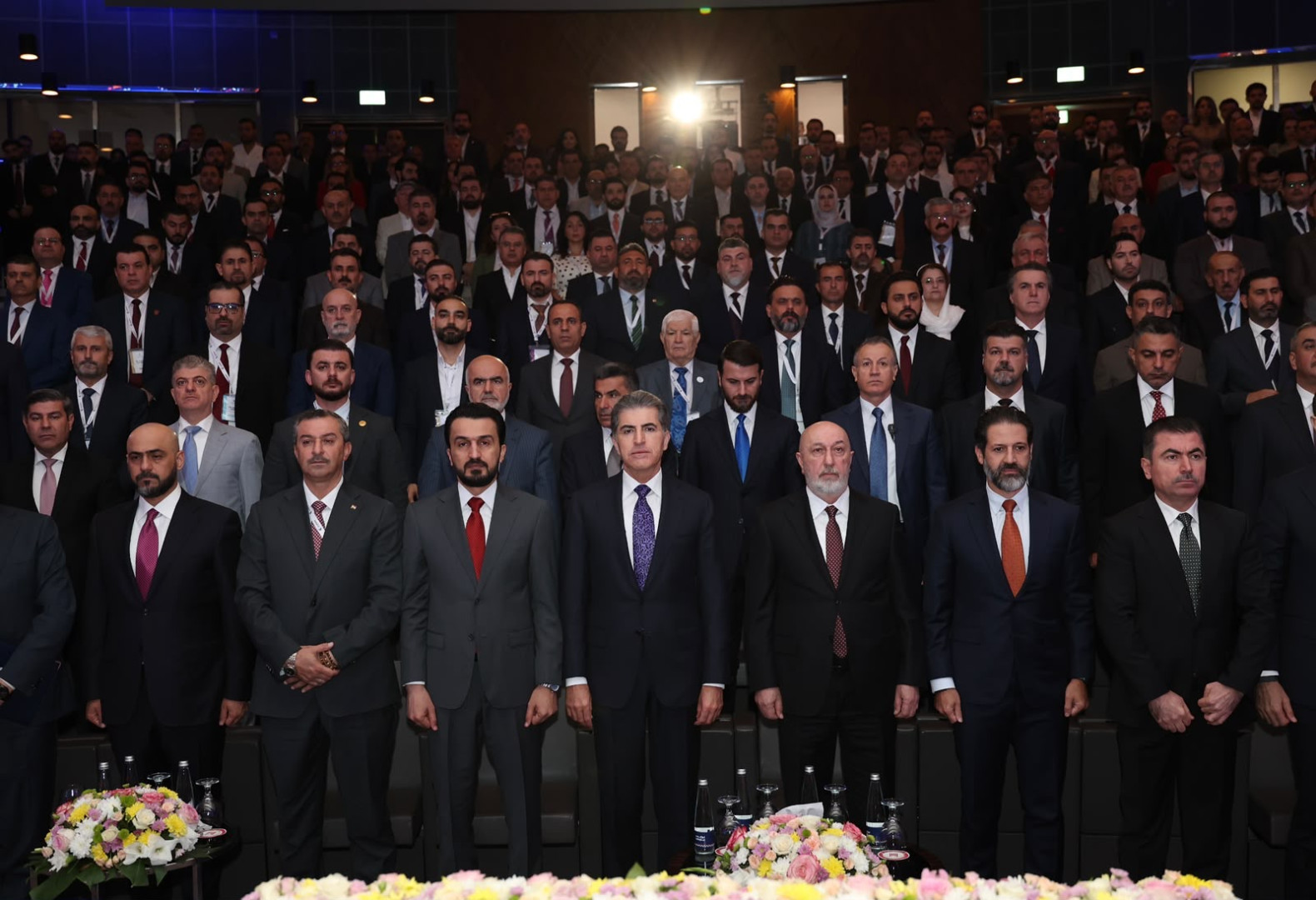
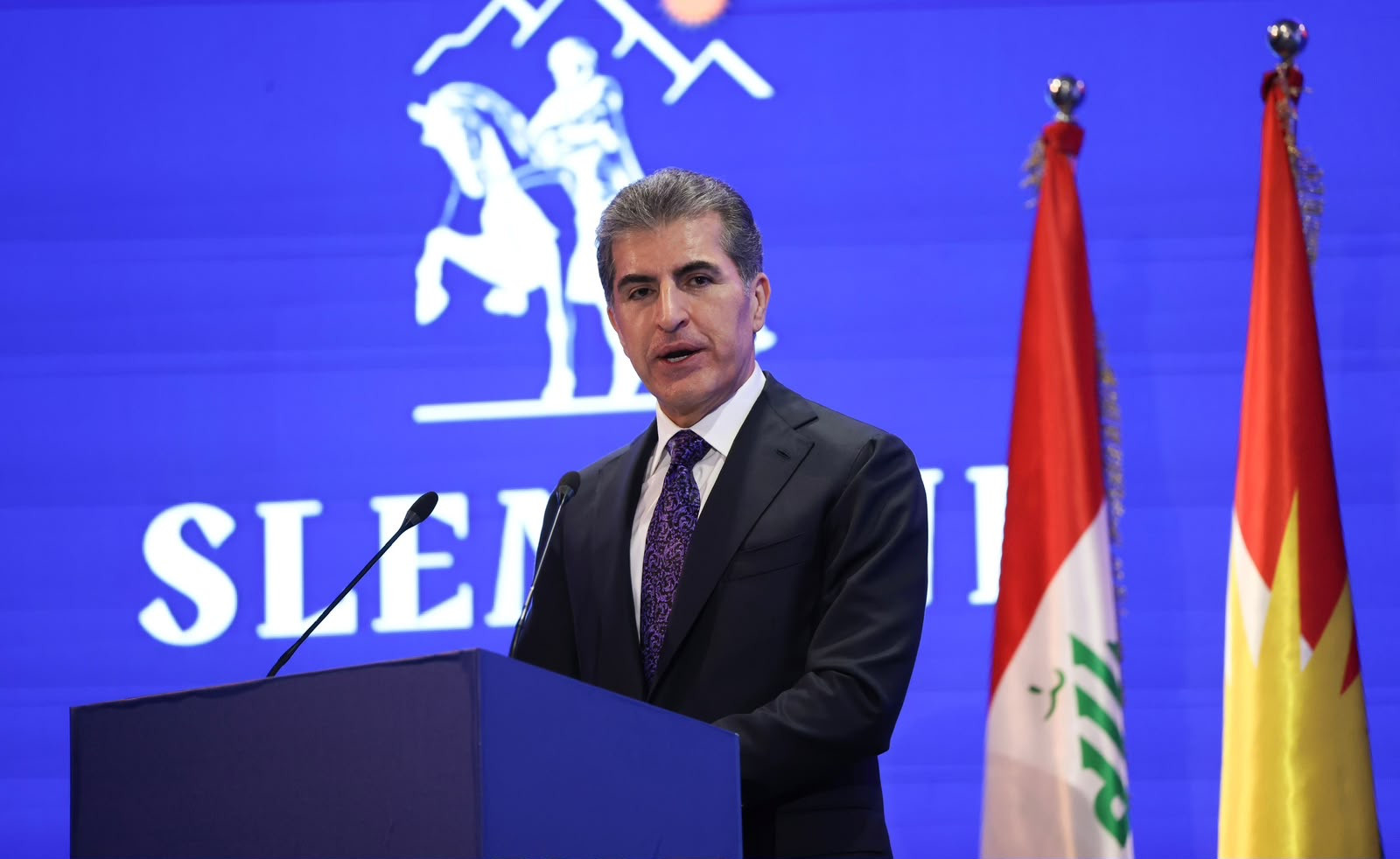
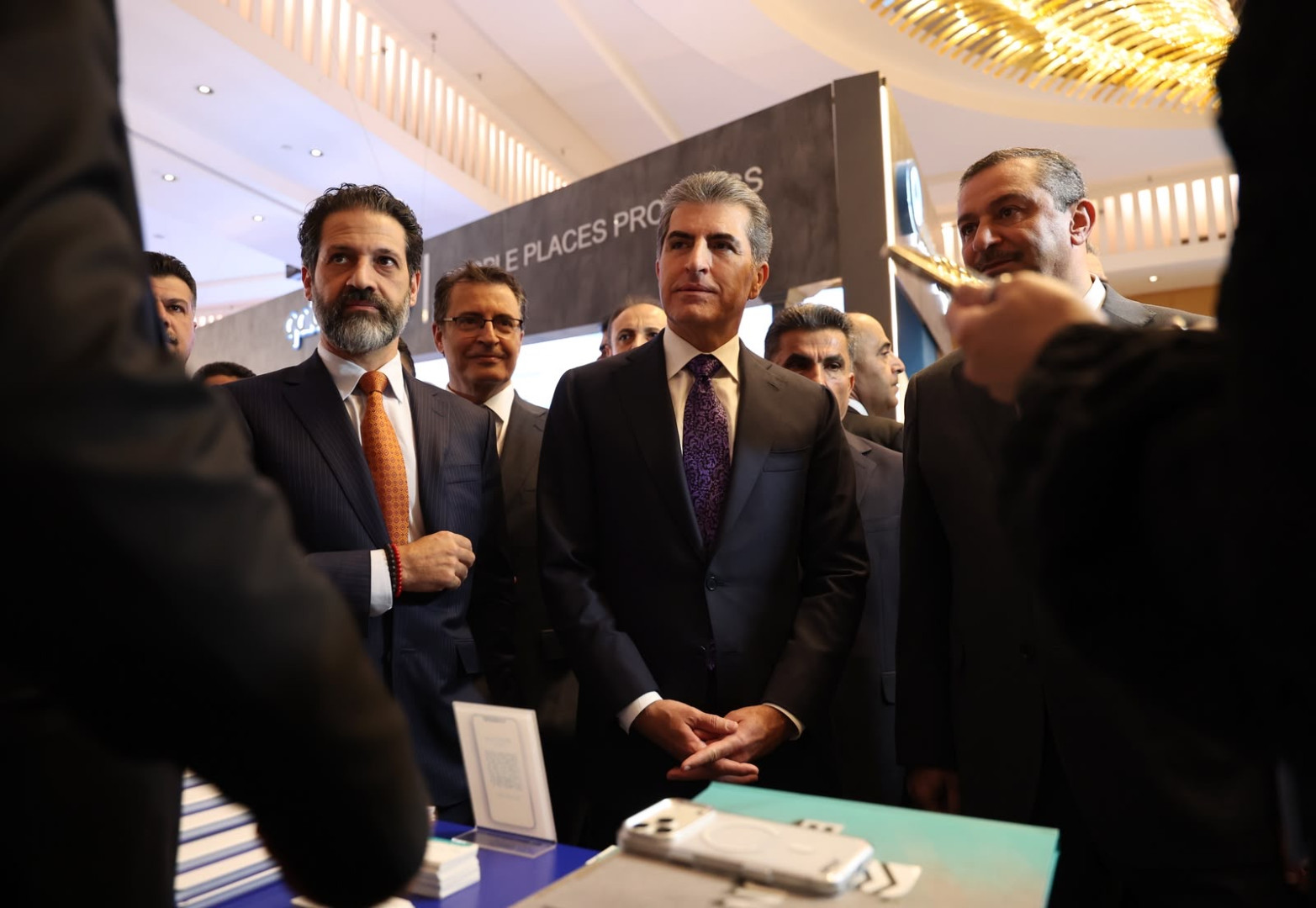
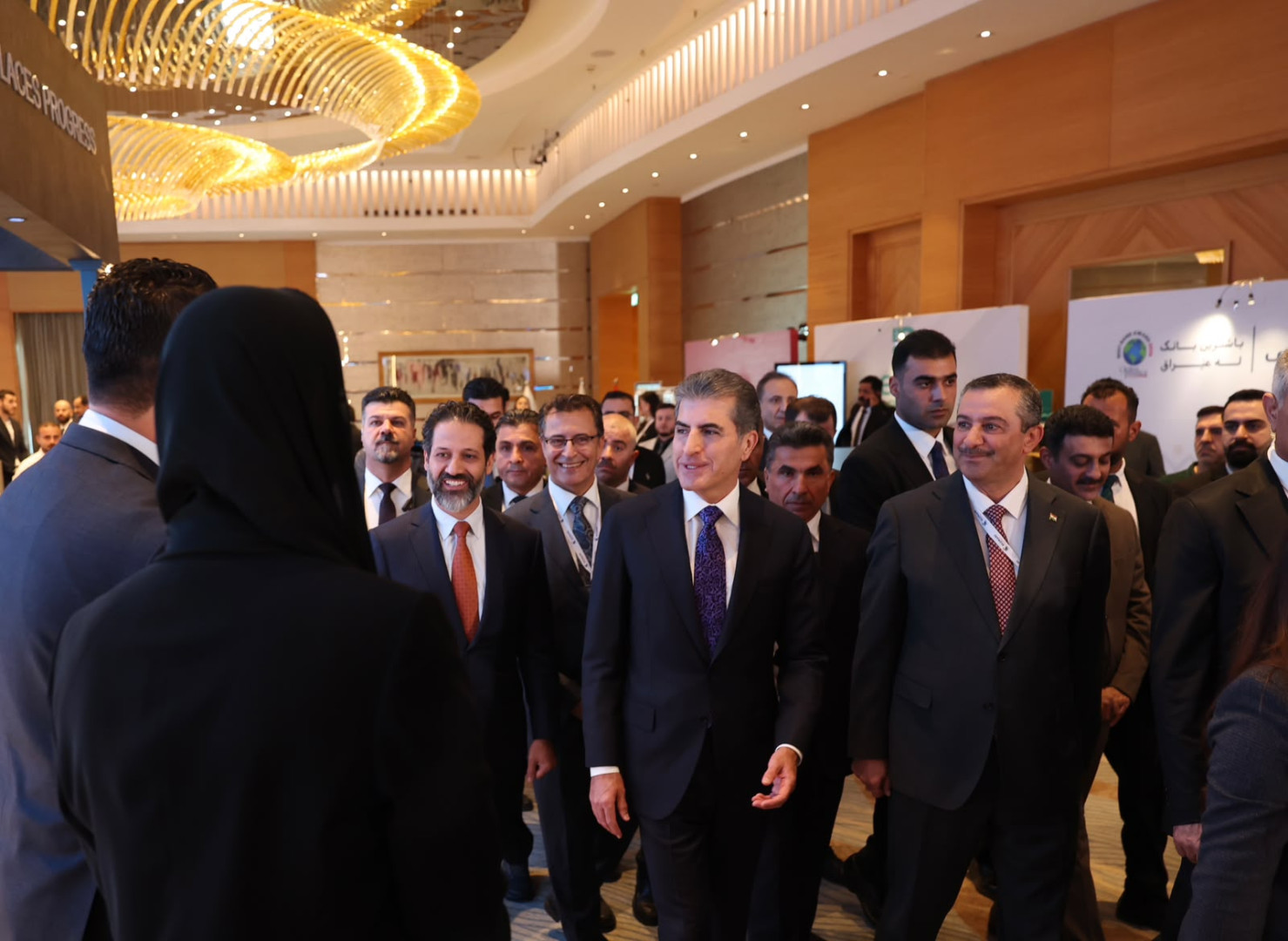
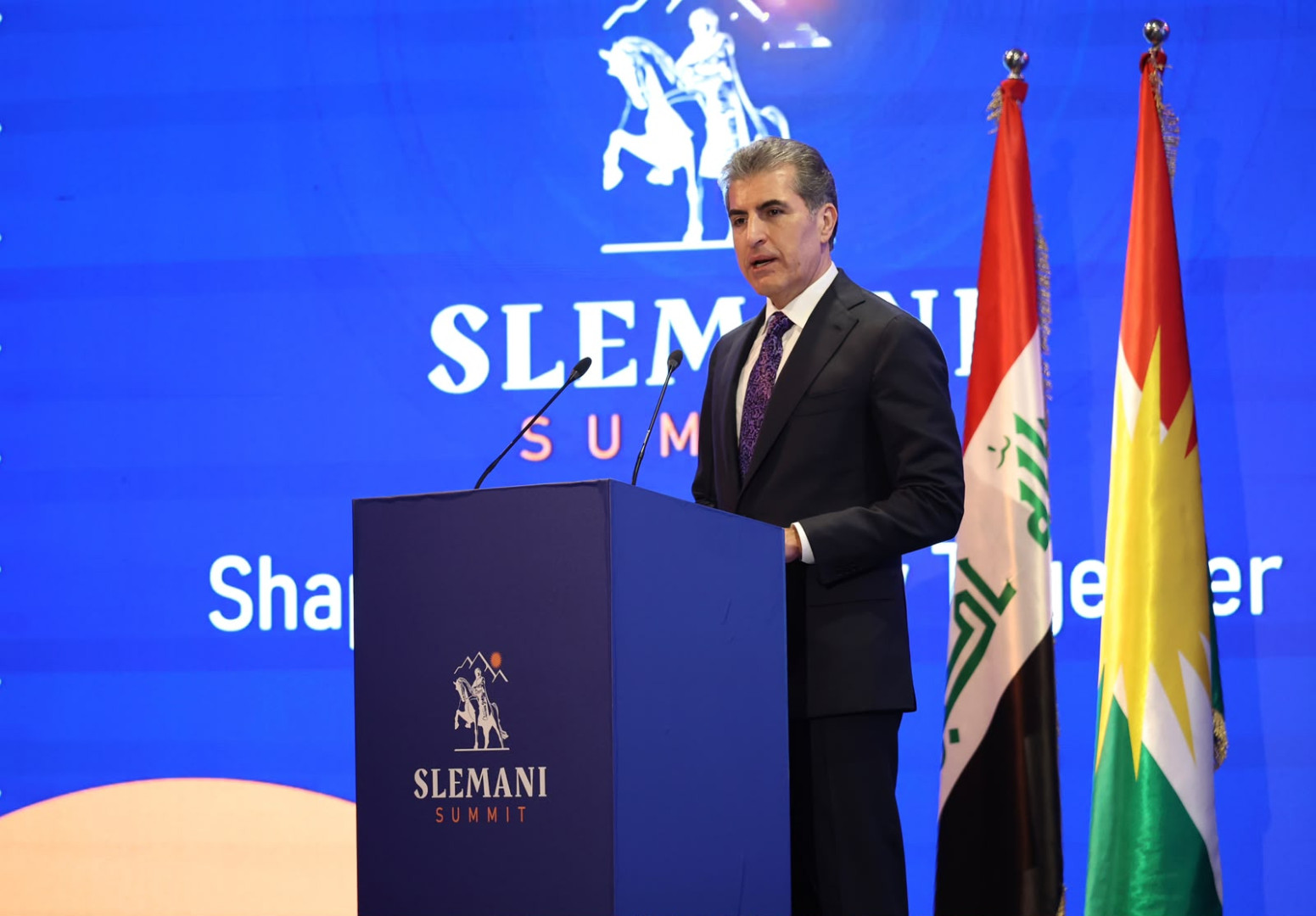
President Nechirvan Barzani participated in the opening ceremony of the Slemani Summit on Economy, Development, and Investment. The event was attended by the President of the Federal Republic of Iraq, the Deputy Prime Minister of the Kurdistan Regional Government, a number of officials from both Iraq and the Kurdistan Region, as well as local and international business leaders and investors.
During the ceremony, the President of the Kurdistan Region delivered a speech, the text of which reads as follows:
Distinguished guests,
Good morning,
I am pleased to join you today in Sulaymaniyah at this important forum, organized by the Vision Foundation to discuss the economic future of the Kurdistan Region and Iraq. I thank them for their efforts.
The private sector has been a key partner in the development of the Kurdistan Region, and the Region’s continued progress requires an even broader and stronger role for the private sector. It is our responsibility to create a favorable legal, administrative, and security environment for investment.
In recent years, good infrastructure and industrial facilities have been developed in the Kurdistan Region. However, the time has come to fully transition from a consumption-based economy toward a productive and diversified economy by directing greater investment toward agriculture, industry, and tourism, while supporting local production in the Kurdistan Region.
We view the economies of the Kurdistan Region and Iraq as complementary, not competitive. A strong Iraq means a strong Kurdistan Region, and the prosperity of the Kurdistan Region serves all of Iraq. Political disagreements must not create obstacles to trade and investment. Rather, together with the Federal Government, we must reach a clear constitutional framework for financial, customs, and taxation matters.
We want companies in the Kurdistan Region and Iraq to grow. We welcome companies from the Kurdistan Region undertaking new projects in central and southern Iraq. At the same time, it is essential that Baghdad facilitate the work of companies operating in the Kurdistan Region and that their legal and financial affairs in the Kurdistan Region are also recognized and trusted in Baghdad.
I would like to address the core of the matter: no banking reform can be sustained, no strong industry can be built, and no long-term investment can be attracted without political and legal stability. Capital seeks trust, trust requires stability, stability requires the rule of law, and the rule of law begins with respect for and adherence to the Constitution.
Distinguished guests,
More than two decades after the ratification of the Iraqi Constitution, we must ask ourselves very clearly: Have we implemented the Constitution as it is and as we agreed?
The answer is clear: No, we have not.
We believe that Iraq’s problem does not lie in the Constitution itself, but rather in the fact that it has still not been fully and properly implemented. The Constitution is not a special demand of the Kurds, nor is it a privilege for the Kurdistan Region. Rather, it is a contract among all Iraqis and a guarantee of the rights of all components and all citizens of Iraq.
When we call for the implementation of the Constitution, we are not asking for anything at the expense of any other component. Rather, we are calling for adherence to the contract that Iraqis themselves voted for in order to build a federal, democratic, and pluralistic state. Implementing the Constitution strengthens partnership and unity among Iraq’s components and state institutions.
I state this clearly: the Constitution is a source of strength for all components of Iraq. Implementing the Constitution strengthens the state and restores trust in the state among all components of the Iraqi people. We do not want an Iraq in which each component must rely on its own strength, numbers, or position to protect itself. Rather, we want an Iraq in which everyone can rely on the Constitution.
We want a state in which Kurds, Arabs, Turkmen, Christians, Yezidis, and all citizens of Iraq feel that their rights do not change with changes in governments or the balance of power. Rather, their rights are protected by the Constitution and safeguarded by state institutions and the law.
The constitutional framework of federalism represents a fundamental asset for Iraq's institutional strength. When federalism is implemented in accordance with constitutional principles, Iraq possesses the capacity to emerge as a strong regional power. The Iraqi electorate selected and ratified federalism as the form of governance through which to build their nation on the foundation of partnership and preserve national unity. Therefore, implementing the Constitution is the key to addressing Iraq's challenges.
The Kurdistan Region maintains its integral position within the federal structure of Iraq. We affirm that Baghdad represents our strategic depth, and the security and stability of Iraq are inseparable from the security and stability of the Kurdistan Region. The prosperity and strength of the Kurdistan Region must correspondingly be recognized as a source of strength for Iraq as a whole. Therefore, the persistent tensions between the Kurdistan Region and Baghdad must not continue as recurring annual disputes addressed only through temporary solutions.
Our country possesses a Constitution, established institutions, and a framework for dialogue. Rather than pursuing new agreements each time a crisis emerges, we must prioritize the implementation of the foundational agreement that binds us together: the Constitution itself. Matters pertaining to the budget, salaries, oil and gas, and powers require lasting constitutional solutions that safeguard the rights of the Kurdistan Region, the rights of Iraq, and the rights of all Iraqi citizens.
The aim is not for Erbil to prevail over Baghdad, nor for Baghdad to prevail over Erbil. Rather, the aim is for Iraq to succeed and for the Constitution to prevail. Our collective strength lies in a strong federal Iraq, and our collective strength also lies in a stronger Kurdistan Region within Iraq. Iraq’s strength lies in acting in the spirit of the Constitution and ensuring that Iraqis, with all their components, see themselves under the umbrella of the Constitution within a genuine and meaningful partnership.
Distinguished guests,
Had we adhered to the Constitution from the outset and fully implemented it, Iraq today would indeed be more stable, more developed, and more prosperous. Trust among its components would be stronger, and Iraq’s standing in the region would indeed be greater.
Managing crises instead of resolving them has wasted considerable time, opportunities, and resources. The time has come to end the management of our disputes and begin resolving them. The path is clear: the Constitution, dialogue, and national partnership. Institutions must be strengthened, and a mechanism must be established to identify mistakes and correct them so that they are not repeated.
This brings us back to the central theme of today’s forum. An investor establishing a major project is planning for decades into the future. Therefore, investors need clear laws, a trustworthy and independent judiciary, a strong banking system, and political stability in order to carry out their projects. For this reason, implementing the Constitution and upholding the rule of law are inseparable from economic prosperity.
Distinguished guests,
The Kurdistan Region and Iraq possess considerable potential and significant human capital. It is our responsibility to create an environment in which they can flourish by strengthening trust between citizens and institutions, between the public and private sectors, between the Kurdistan Region and Baghdad, and throughout Iraq. Wherever trust and the rule of law prevail, investment, employment opportunities, and development increase.
In Iraq and the Kurdistan Region, our problems must no longer place a burden on ordinary citizens. The people of Kurdistan look to the political forces and parties to resolve the issues within the Kurdistan Region through harmony, unity, and collective cooperation. Greater political stability in Kurdistan will improve the lives and livelihoods of citizens and investors. Therefore, we must all work toward agreement and stability.
In this regard, I would like to express my gratitude to the Vision Foundation for extending this invitation to us. I would also like to commend my dear brother, Mr. Qubad Talabani, for his vision behind this initiative and for the continued support he and the Vision Foundation have provided for this important work. Mr. Qubad Talabani and I worked together for many years in the Kurdistan Regional Government, and I consider him an asset to the Kurdistan Region and to this country. I extend my sincere appreciation to him.
Thank you very much.