
 پەرلەمانی کوردستان
February 15, 2026
President Nechirvan Barzani concluded his participation in the Munich Security Conference after three days of extensive meetings with heads of state and government, as well as senior officials.
In discussions with French President Emmanuel Macron, Azerbaijani President Ilham Aliyev, the Prime Ministers of the Netherlands, Qatar, and Lebanon, as well as various foreign ministers and senior officials from the United States, Europe, and the broader region, the President emphasized the consistent policy of the Kurdistan Region, which will remain a factor of peace and stability in the region. The meetings also addressed the political landscape in Iraq and the Kurdistan Region, along with the most recent developments in the region.
Regarding the situation in Syria, a key topic of discussion, President Nechirvan Barzani emphasized the importance of safeguarding the rights of the Kurds and all other communities in Syria, in accordance with the future constitution of a unified Syria, in addition to many other matters of mutual interest.
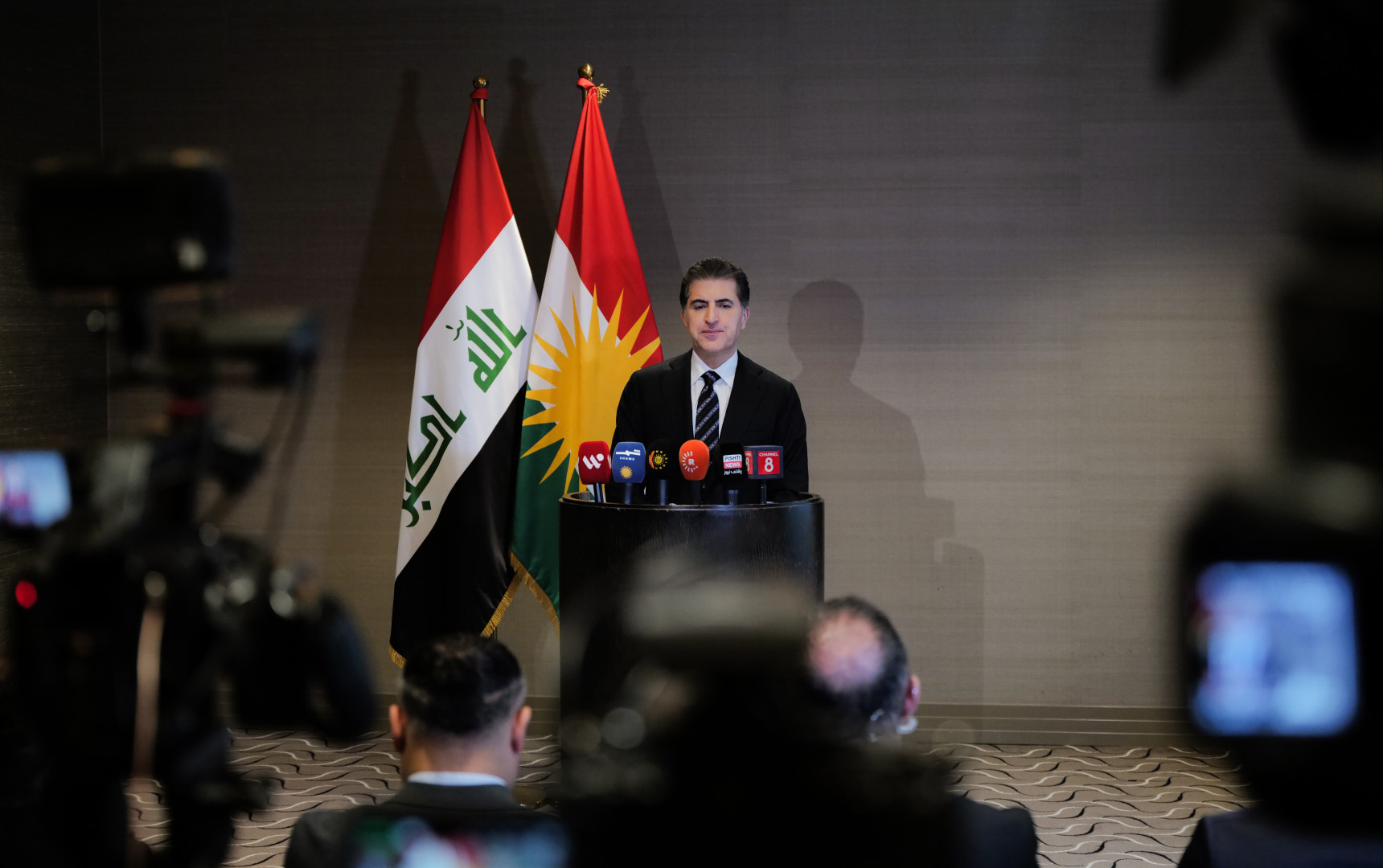
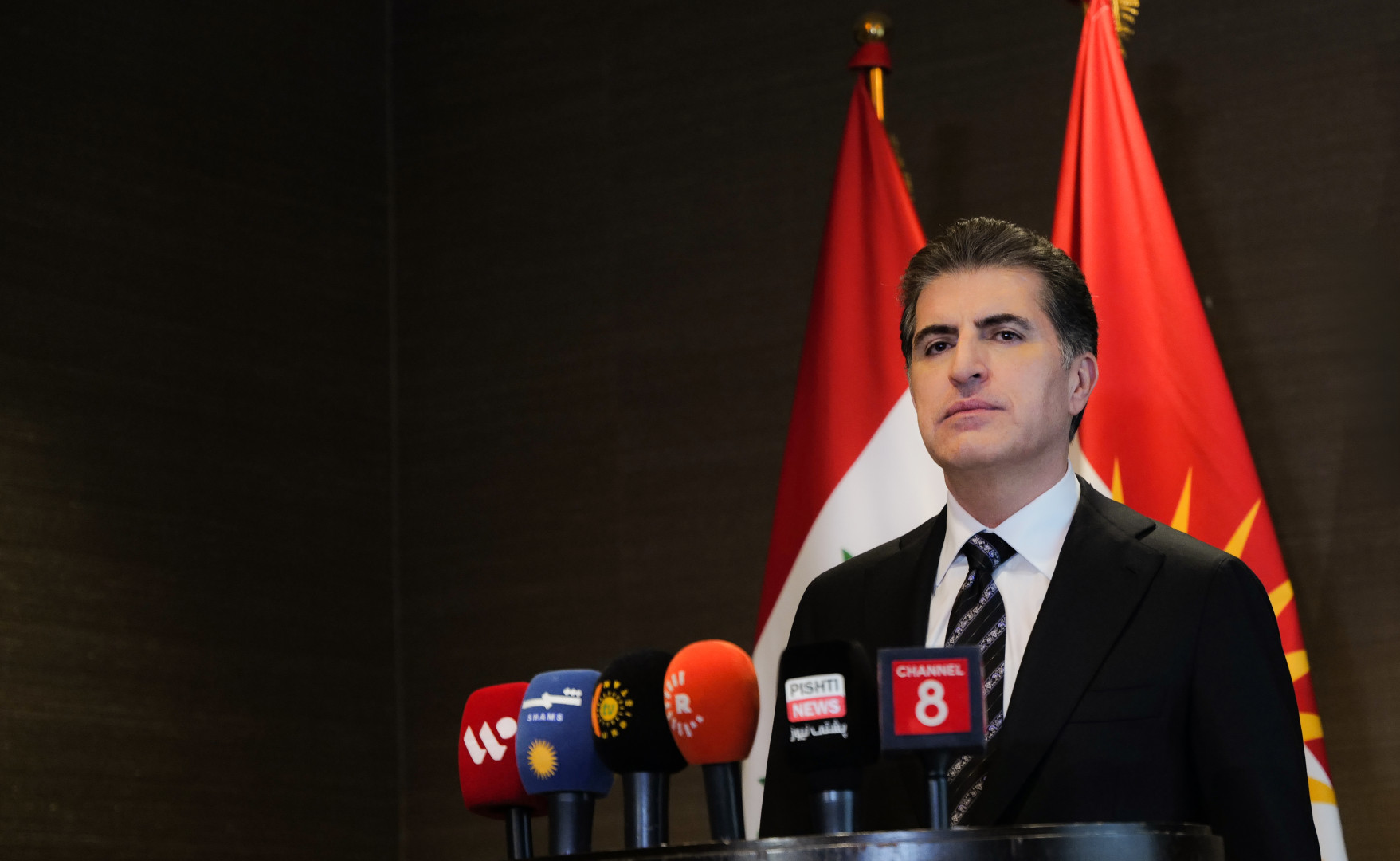
Earlier this evening, President Nechirvan Barzani held a press conference to elaborate on the discussions from the meetings and other matters.
At the conference, the President addressed a range of regional and political issues and stated:
“As is customary each year, we participated in the Munich Security Conference and engaged in discussions with several foreign leaders and officials. This year, the Syrian situation and the establishment of the new Iraqi government were particularly significant. We are committed to doing everything possible in Syria and Iraq to ensure stability in the region and to facilitate the prompt formation of the new cabinet in Iraq. Regarding the Kurdistan Region, it is evident that the policies of these countries aim to establish a stable and robust Kurdistan Region within the context of federal Iraq. We have addressed the challenges and issues with Baghdad during these discussions.”
When responding to inquiries from reporters concerning his involvement in the peace process, particularly in relation to Türkiye and Syria, President Nechirvan Barzani stated:
“To begin with, I would like to address the situation in Syria. Our stance in the Kurdistan Region is one of support for this process. The discussions between the SDF and the Syrian government are ongoing. We hope that other Kurdish parties, including the ANKS and others, will engage in the current political discussions with Damascus. It is important to be pragmatic, and I believe that the current arrangement is reasonable considering the circumstances in Syria. Considering what has transpired and what can realistically be achieved, I view the present situation as a reasonable agreement. The Kurdistan Region in this accord has consistently been in contact with Türkiye and President Masoud Barzani has been in contact with President Ahmad al-Sharaa. Our approach is to ensure that this agreement is fully realized, leading to the restoration of peace and stability. We stress the importance of incorporating the rights of the Kurds and all other communities into the future Syrian constitution. This inclusion would serve as a guarantee for everyone's safety. Our intention is to encourage all parties to reach a consensus within the framework of a unified Syria. This remains the policy of the Kurdistan Region.”
Regarding the peace process in Türkiye, the President stated:
“It is clear that we are witnessing a serious effort, and Türkiye is genuinely committed to resolving the issue. While the pace may appear somewhat slow, leading to some public dissatisfaction, the Kurdistan Region expresses its gratitude for the contributions of all involved, particularly Mr. Devlet Bahçeli for his efforts in this process and Mr. Abdullah Öcalan for engaging in this process. We hope it bears fruit. The PKK also knows clearly what it must do. It must implement the demands that President Öcalan has made of the PKK. We support this process and extend our congratulations and gratitude to all those who are participating in it. Above all, we express our thanks and appreciation to His Excellency President Erdoğan, who is personally supportive of this process reaching a good outcome.“
In response to a question about the political stalemate in the Kurdistan Region, the President said:
“It is true that the political climate in the Kurdistan Region is currently at a standstill. Recently, a very productive meeting took place between President Masoud Barzani and Mr. Bafel Talabani. This meeting was marked by positivity and success. Even though it occurred after a significant interval, it represents a promising beginning. Prior to my arrival in Munich, another bilateral discussion took place between President Barzani and Mr. Bafel Talabani, which I attended. That meeting was also quite hopeful. While we have not yet reached any agreements, I can confidently state that we are moving in the right direction toward achieving a resolution that benefits both the Kurdistan Region and Iraq.”
Concerning Syrian Kurdistan (Rojava), President Nechirvan Barzani addressed a question regarding the prospects for stability there and stated:
“I believe there is potential for a solution; however, the model that can be mutually agreed upon should be left to the Kurdish parties in collaboration with Damascus. When I refer to Kurdish parties, I am speaking about the SDF, the ANKS, and others. Let us explore what kind of self-governance they can establish in Syria. If the focus shifts to what we currently have in the Kurdistan Region, can we replicate that in Syria? This is challenging, as Syria does not have a cohesive geographic structure and its communities are diverse. It is essential to gain the trust not only of the Kurds but also of other communities. President al-Sharaa has issued a decree concerning the governor of Hasakah. The role of the governor of Hasakah is significant, given that the region is home to both Kurds and Arabs. For the Kurdish side, whose candidate has been put forward by the SDF, this is an opportunity to demonstrate that the governor represents all communities in Hasakah. Achieving this requires effective dialogue. Our message to General Mazloum Abdi and others is that they need to engage in the Syrian political process. Damascus is their capital. They should return to Damascus and work seriously toward resolving the existing issues within a unified Syria. This is our position, informed by the experience of the Kurdistan Region.”
Regarding the political process in Syria and the continuation of negotiations, the President stated:
“It is crucial to consider whether there is a genuine intention to address these matters. From my perspective, based on discussions with Mr. al-Shaibani, the Syrian Foreign Minister, as well as statements from the Syrian President, there appears to be an inclination to resolve these issues. The key question is whether there is commitment to a solution. In my view, such commitment does exist from Damascus.”
In response to further questions regarding his efforts to help Mazloum Abdi attend the Munich Security Conference, as well as the possibility of visits to Qamishlo, Afrin, Aleppo, and Damascus, and his message to the people of West Kurdistan, President Nechirvan Barzani stated:
“To begin with, we miss those places. Qamishlo and Afrin are in our thoughts, and such visits will be part of our program, although I cannot specify when. Our message to our brothers and sisters in Rojava is that following the unfortunate events they have endured, there has been significant support from Kurds everywhere. This is a source of pride for every Kurd. What is crucial now is to implement the agreement and, God willing, to foster greater prosperity, stability, and job opportunities in Rojava. In our discussions with numerous foreign companies, including German companies, we emphasized the need for them to begin contributing to the welfare of West Kurdistan following this agreement. I extend my wishes for happiness, safety, and success to our people in Rojava.”
Regarding the position of countries participating in the Munich Security Conference on supporting security and stability in West Kurdistan, President Nechirvan Barzani stated:
“In my opinion, there is political backing. No one supports a military approach. We advocate resolving these matters politically within Syria. What I have observed in European countries is that they have a similar stance. It is important to see how effectively Damascus will honor its commitments. The next question concerns the readiness of the Kurdish parties and the SDF to implement the agreement. This requires political engagement from both Europe and the United States. The Americans have played an important role, and President Macron has contributed significantly to the establishment of this agreement. There is a shared sense of responsibility regarding its implementation. Considering current realities, this agreement is not bad, it is good. In the 2005 Iraqi constitution, we did not claim that it encompassed all our rights, but it included most of them. There is no absolute zero or one hundred; rather, there is a wide range in between. While there may be reservations about the current agreement in Rojava, given the circumstances, I believe it represents a meaningful achievement. As Kurds, we must support it and work to ensure its successful implementation.”
“Thank you.”